
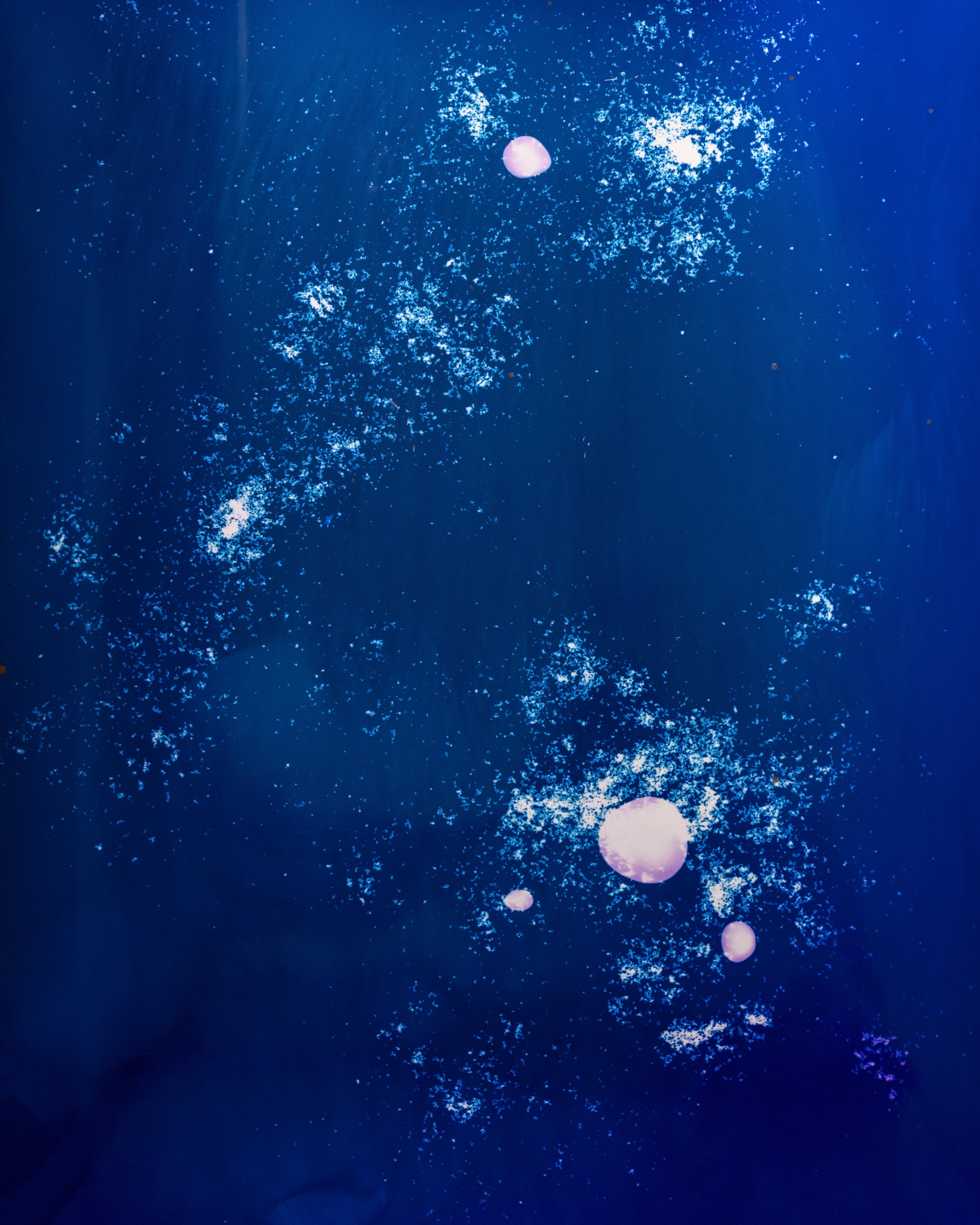
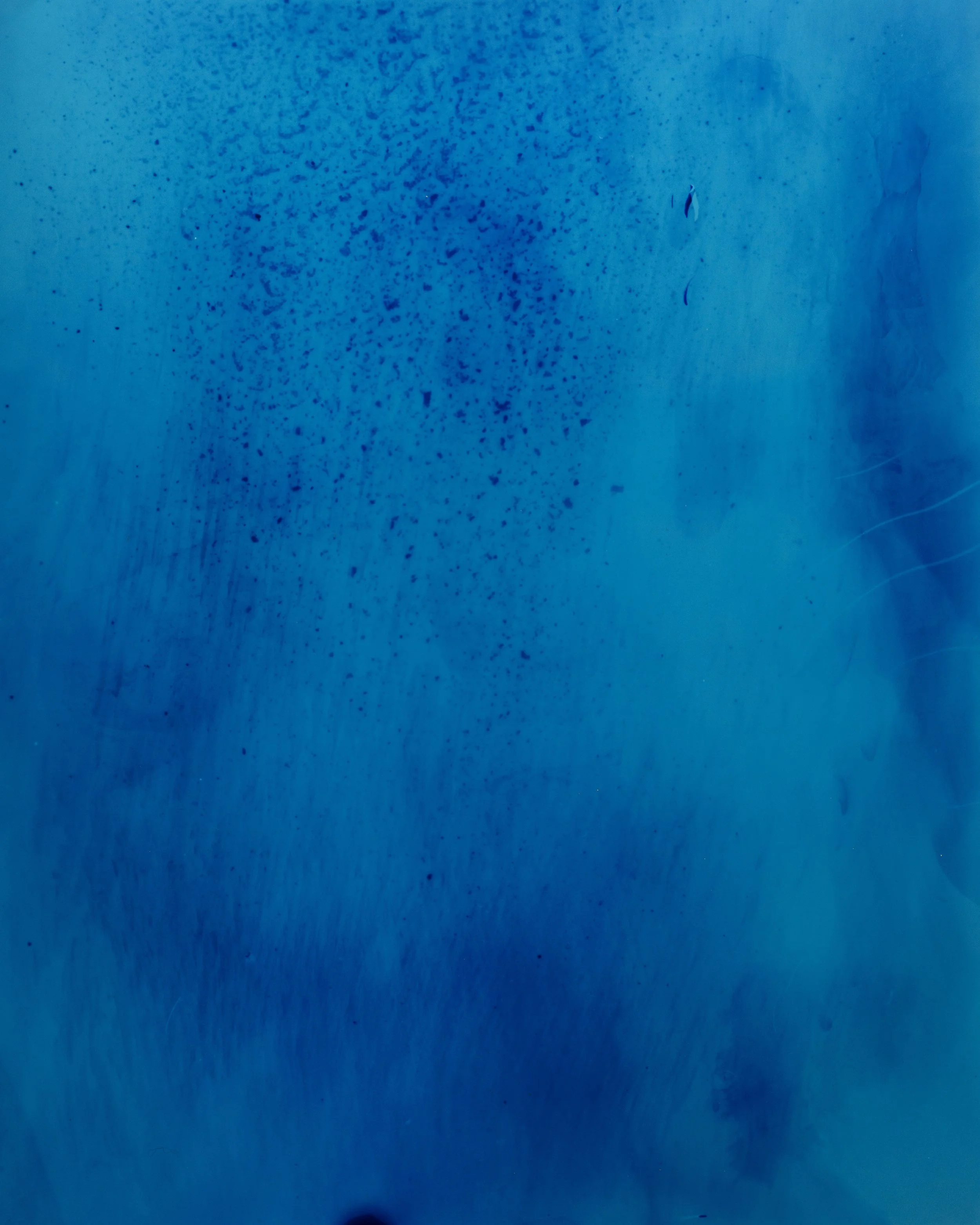
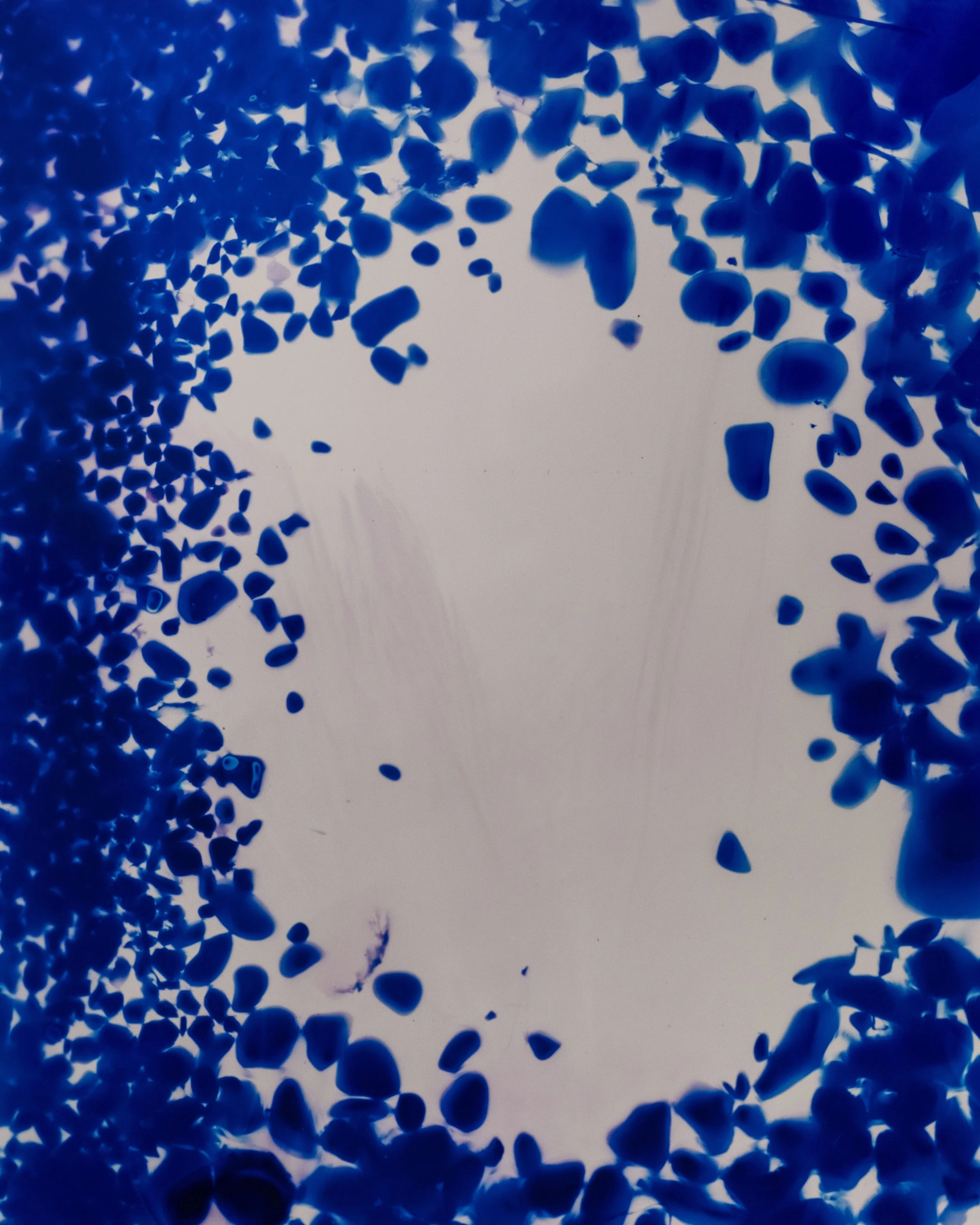
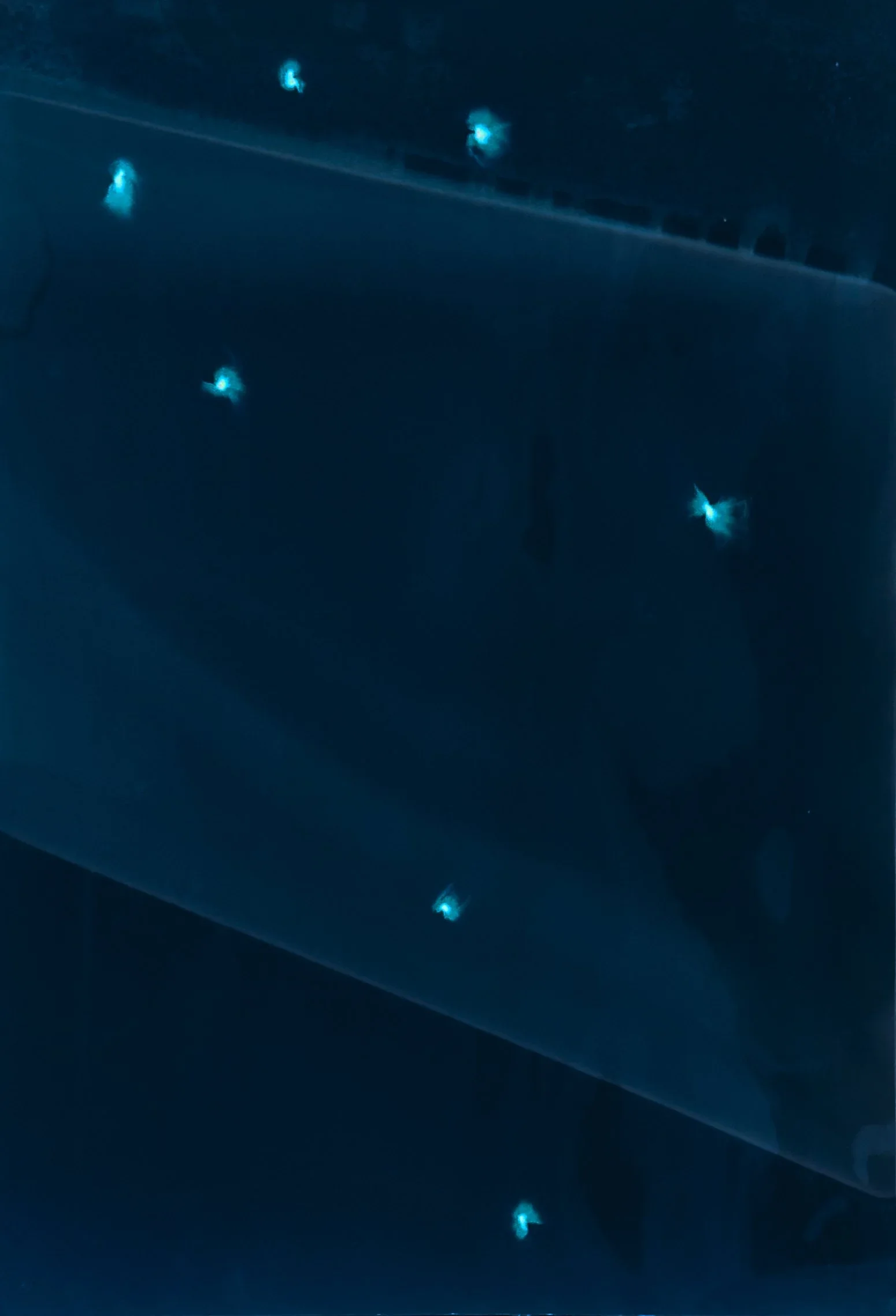
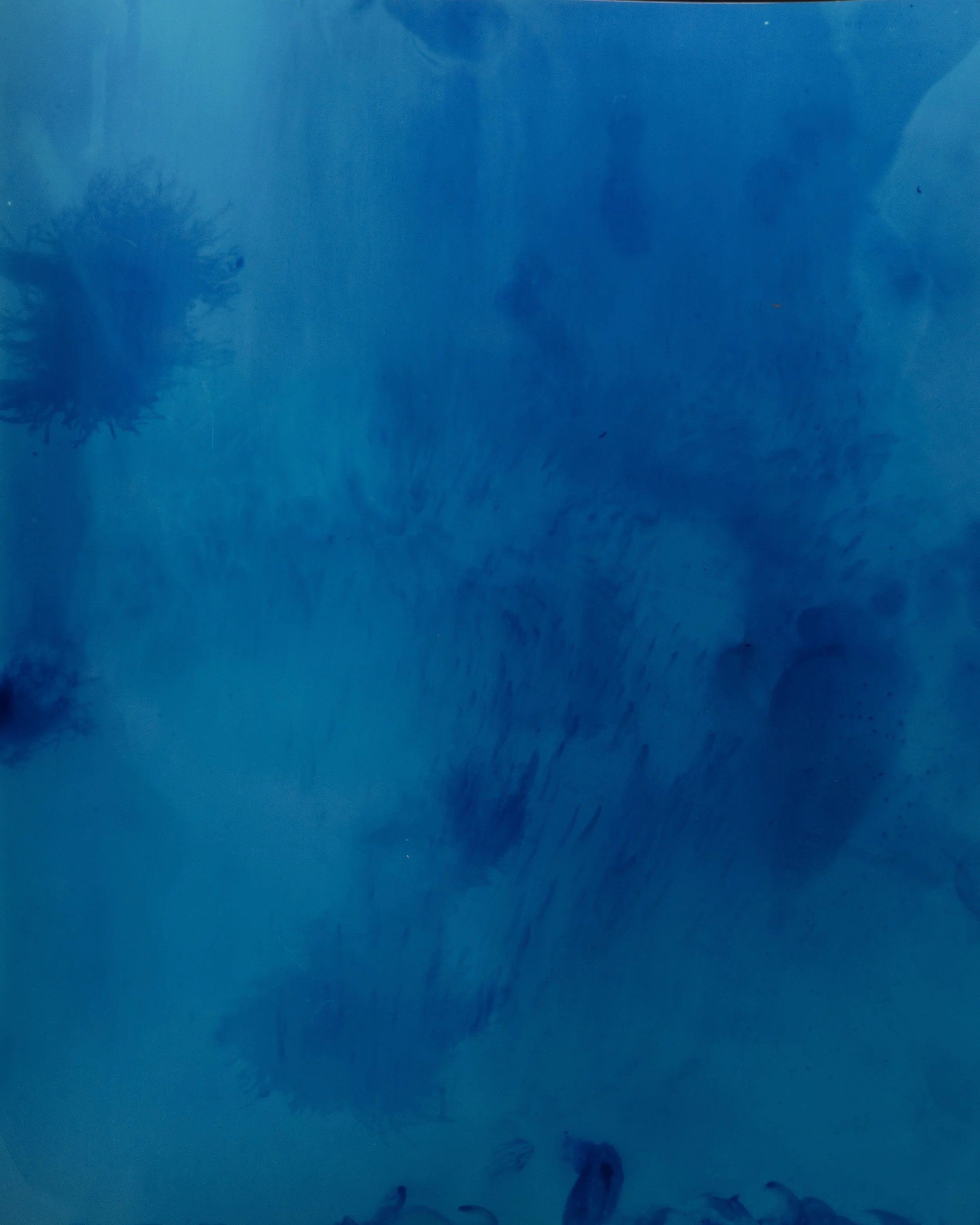
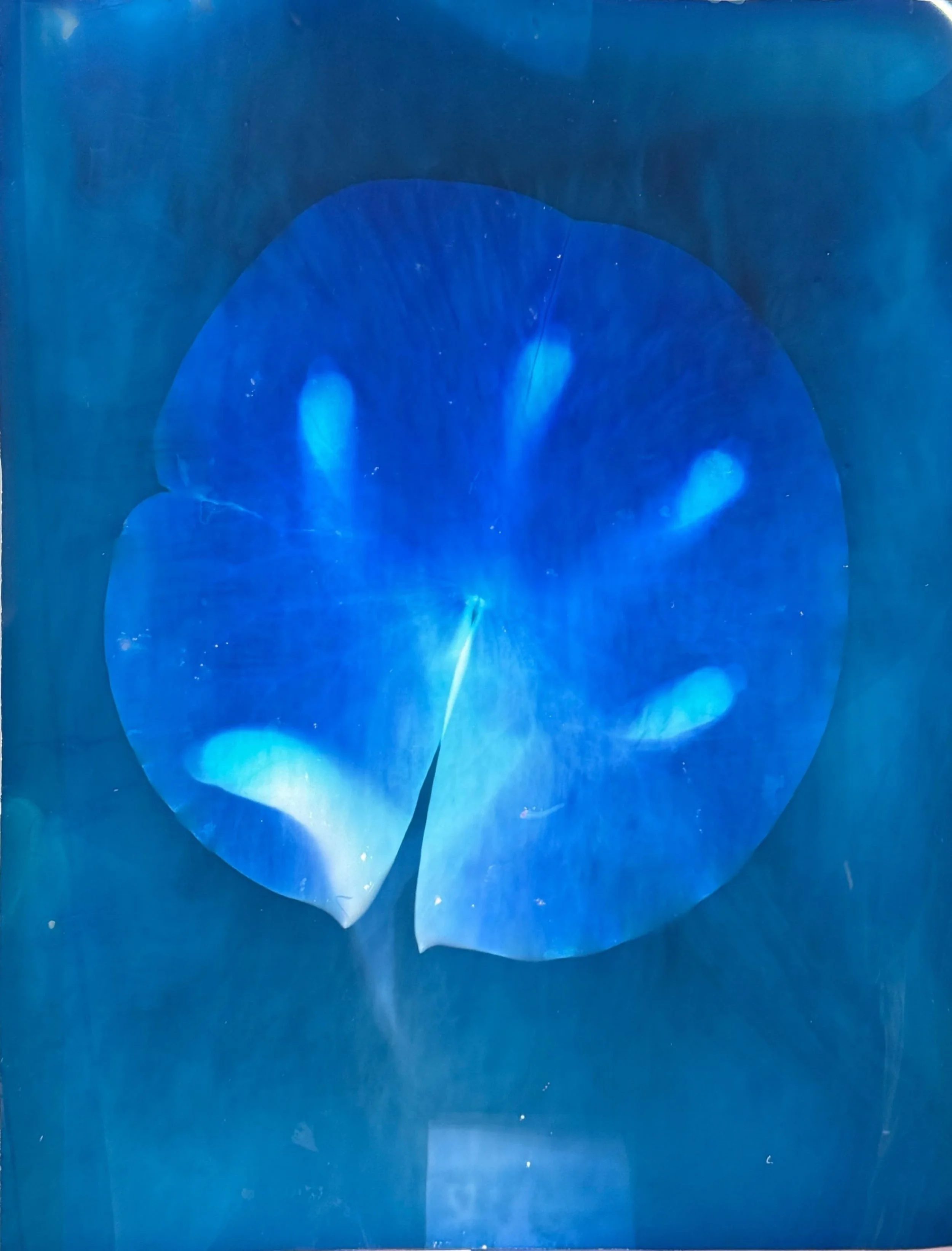

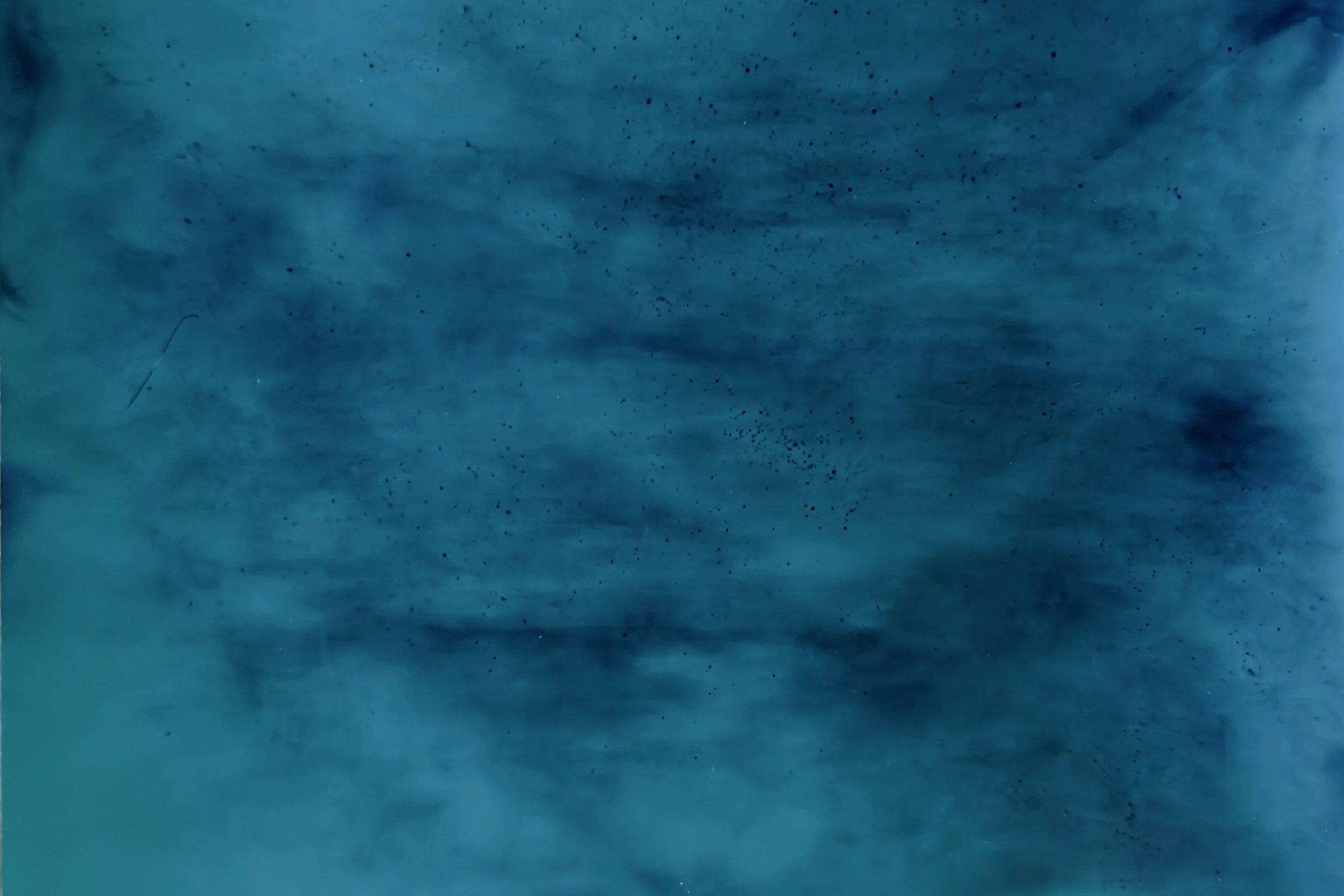
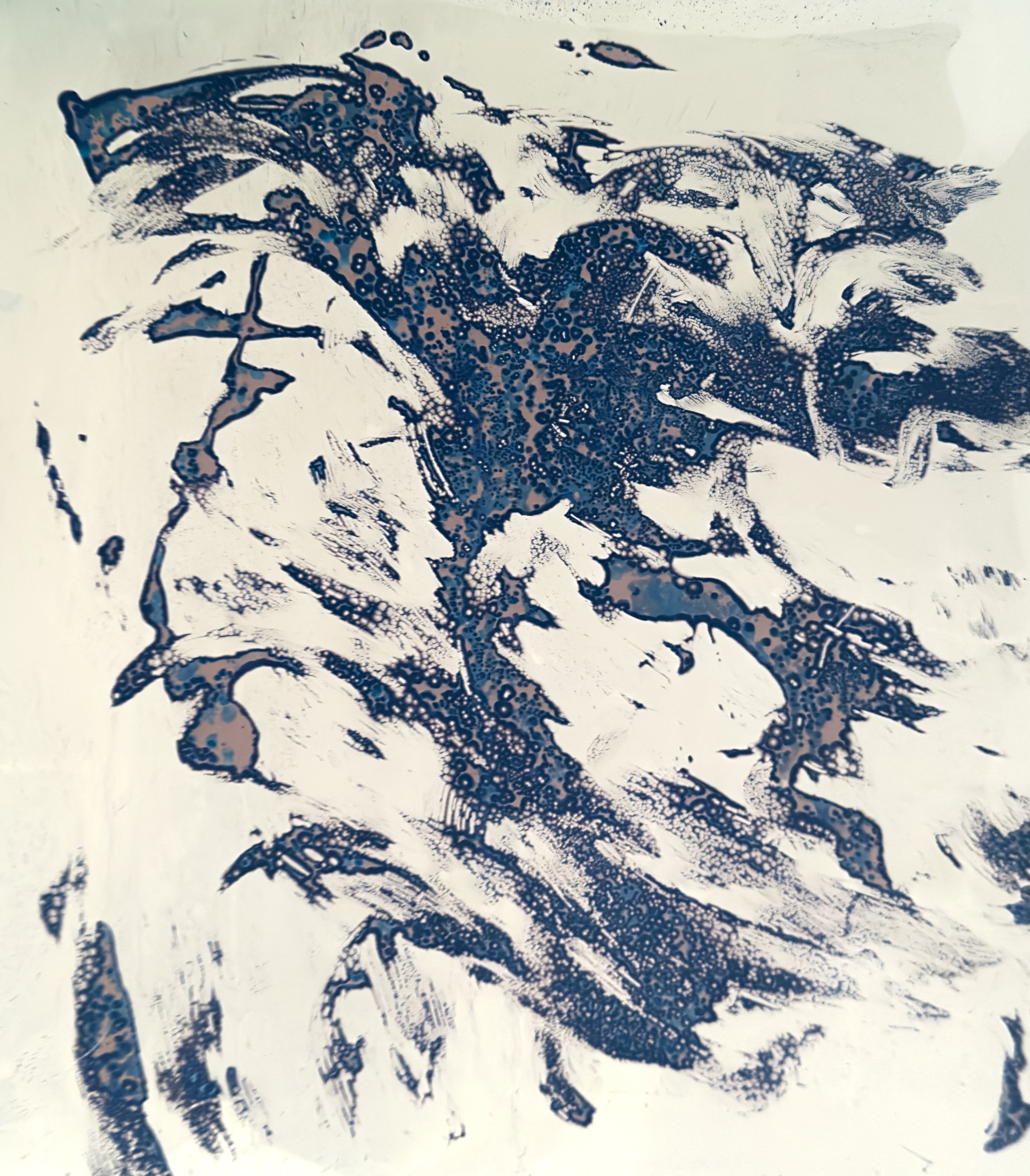
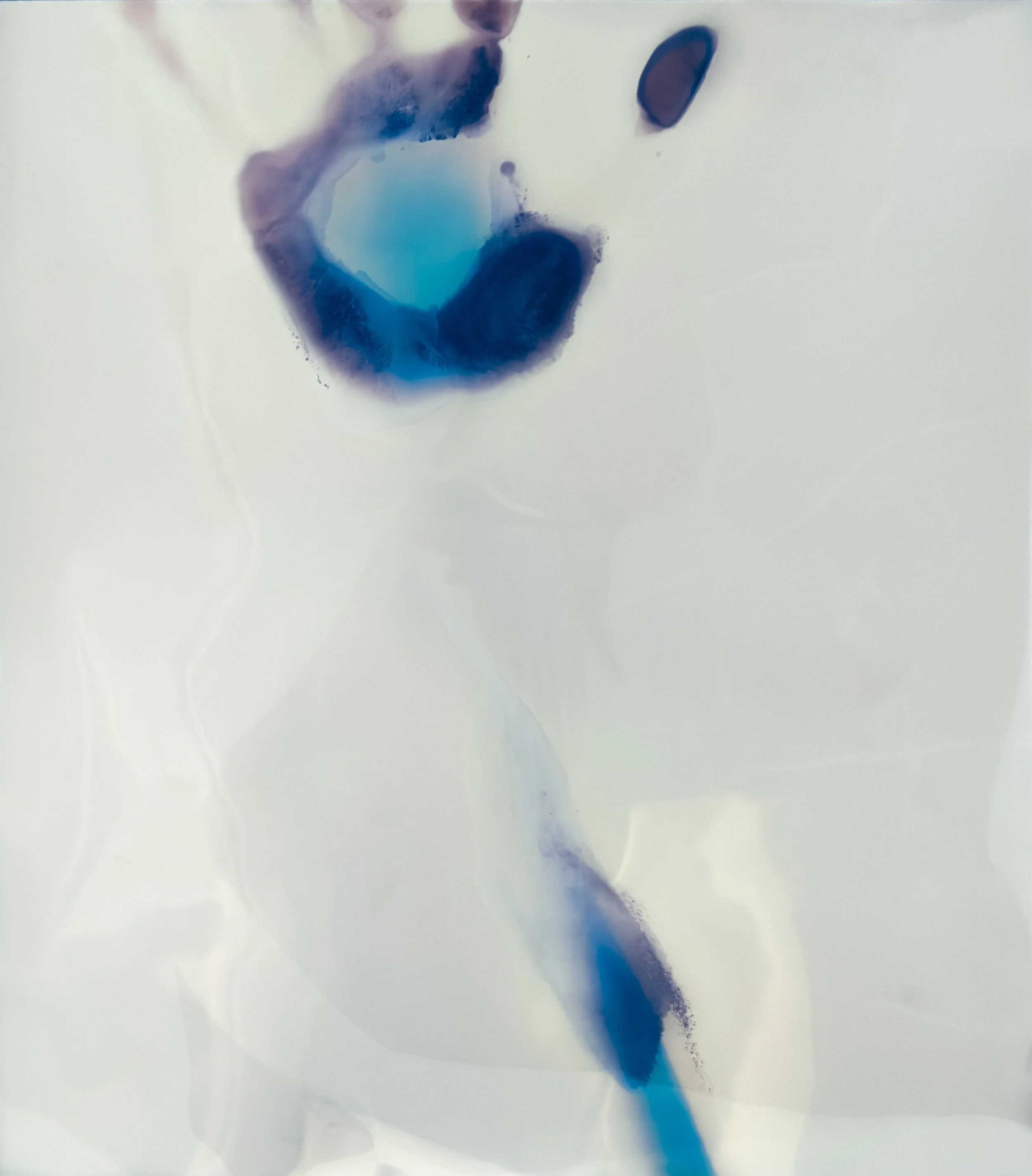
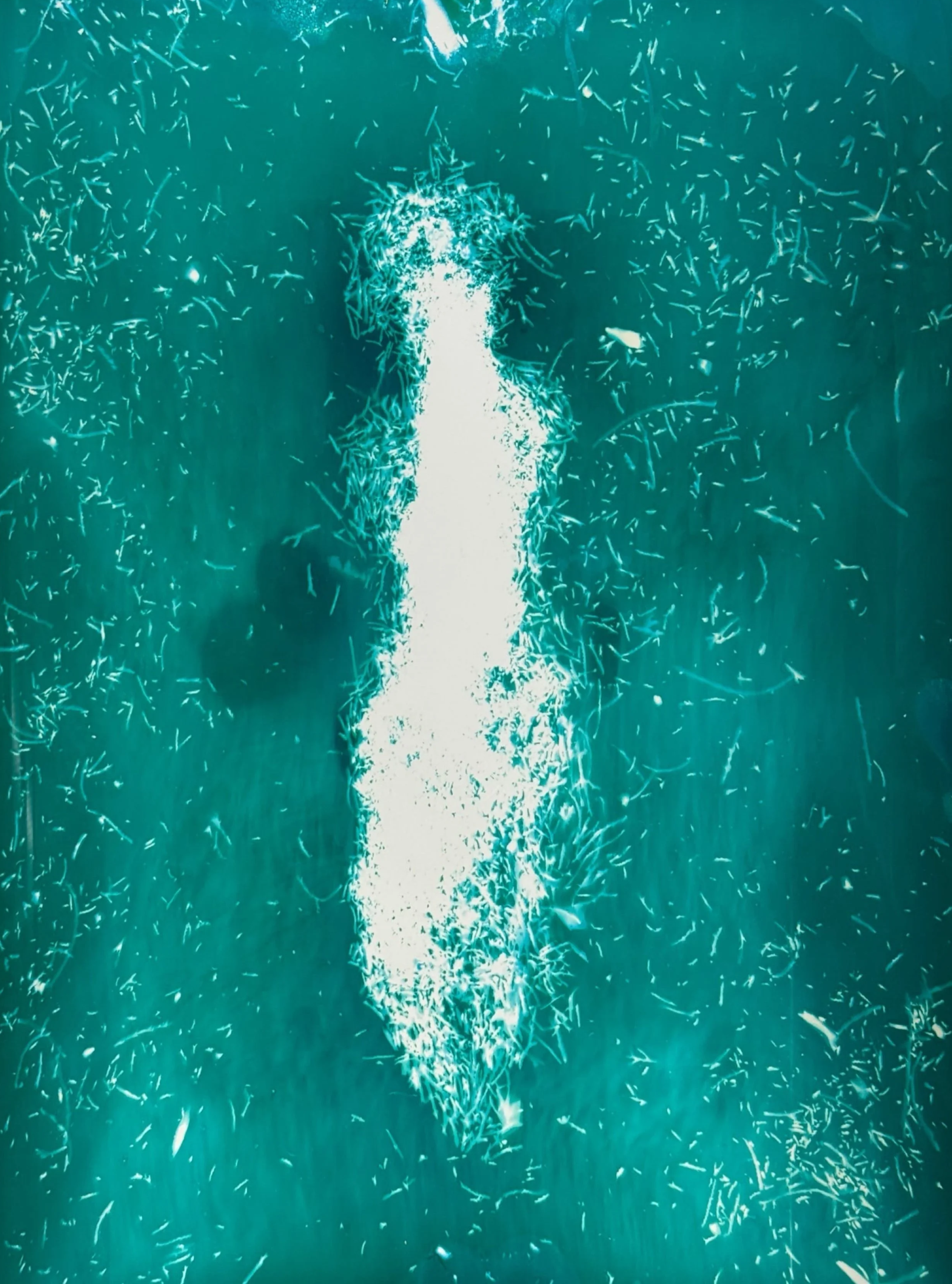
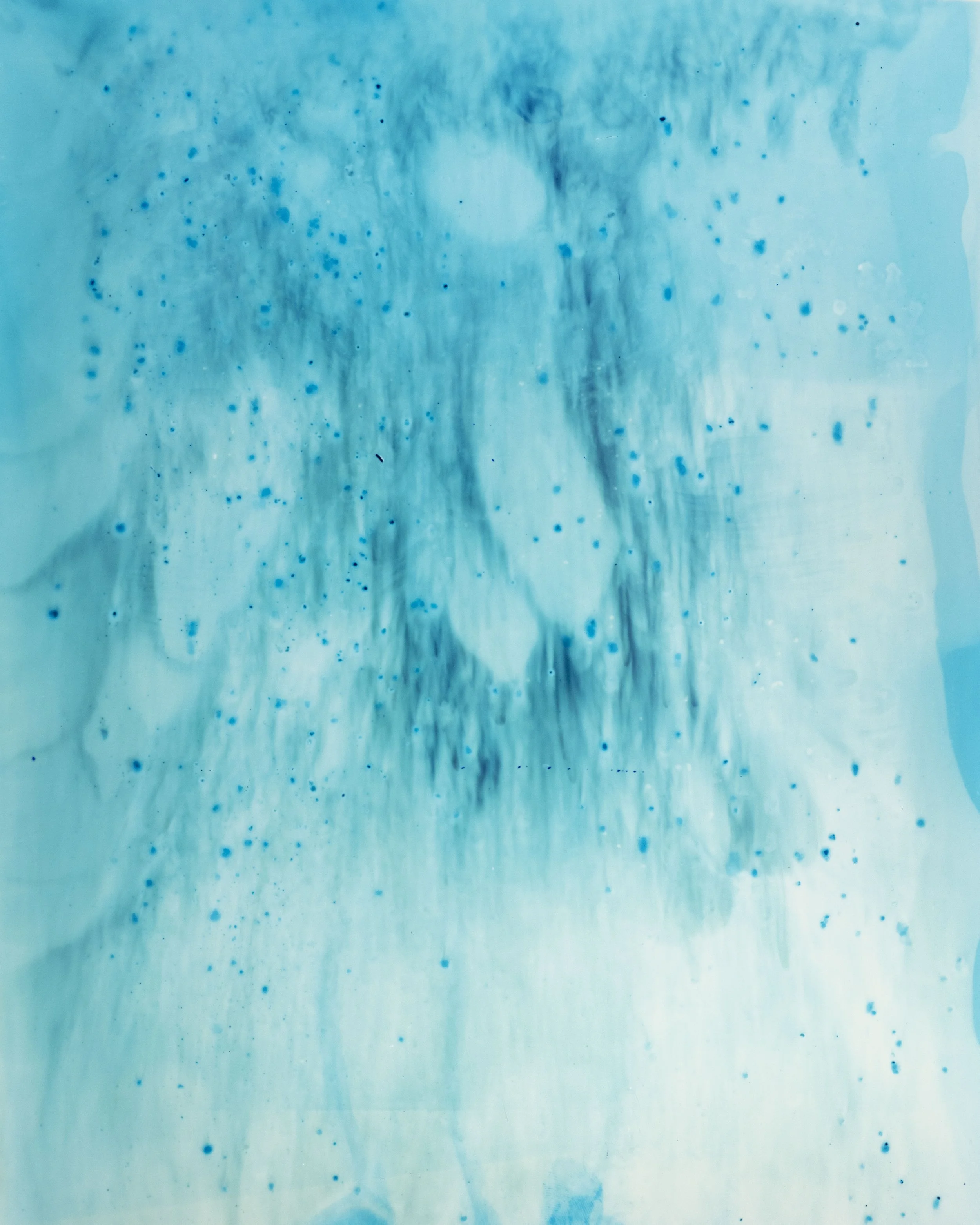
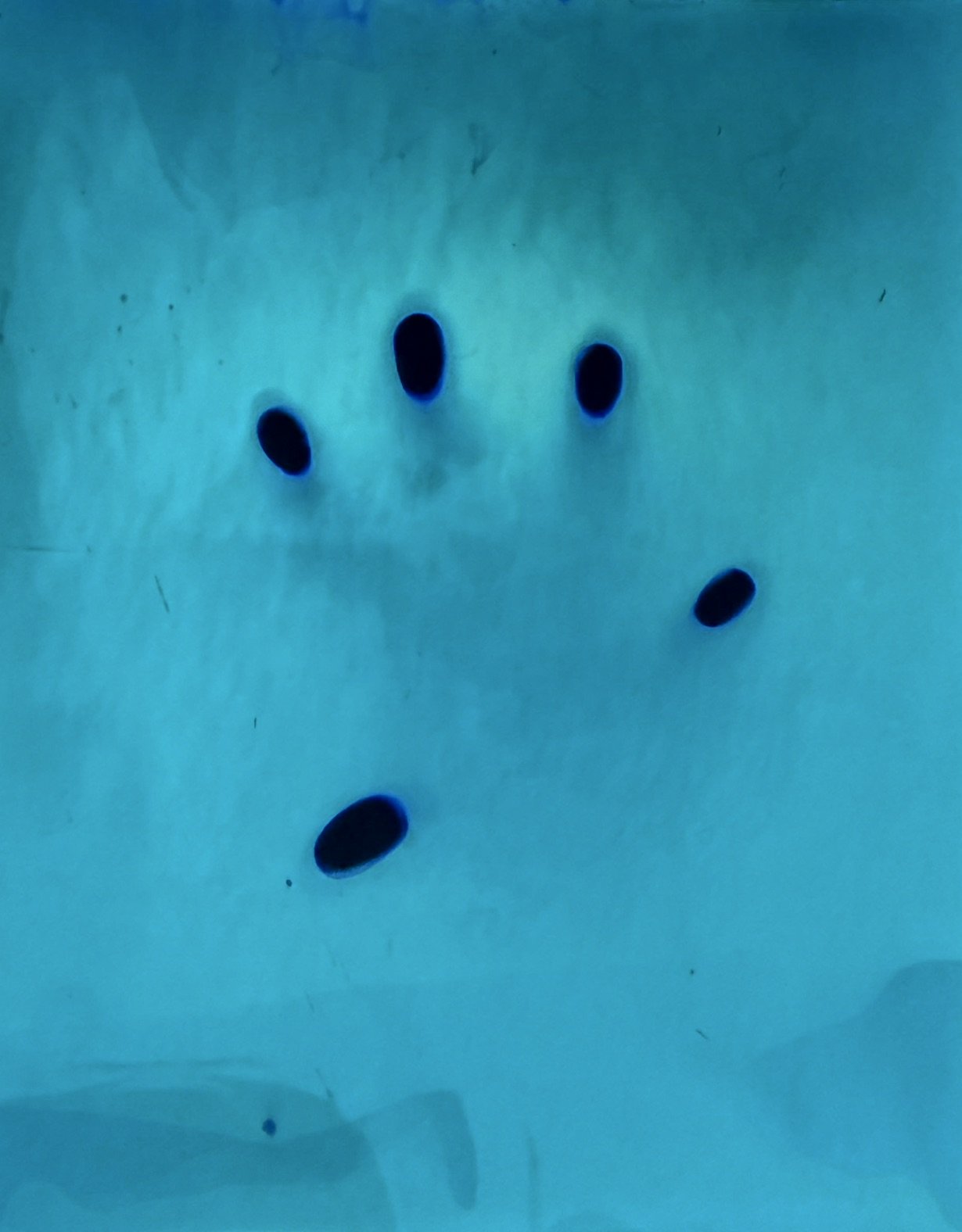
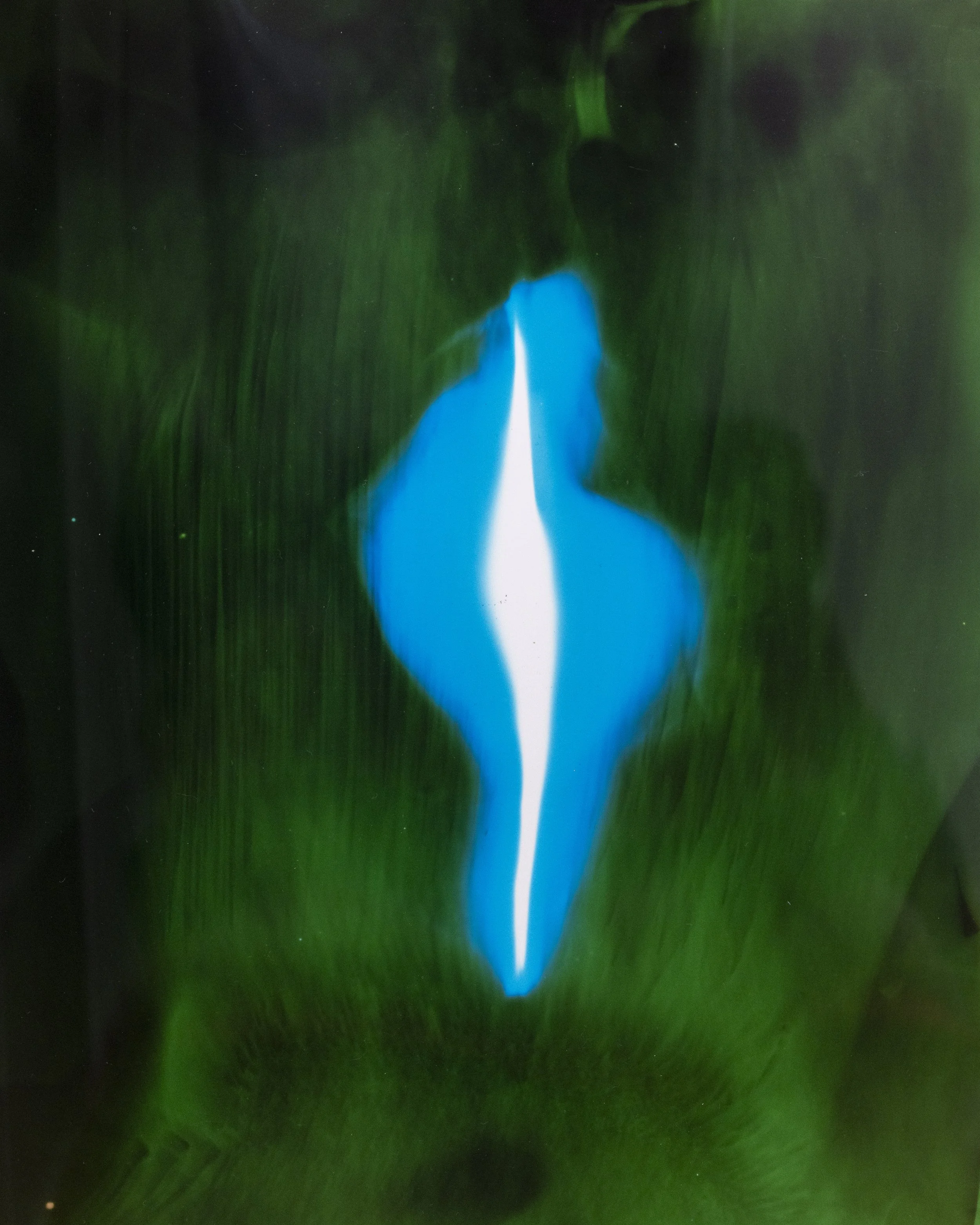
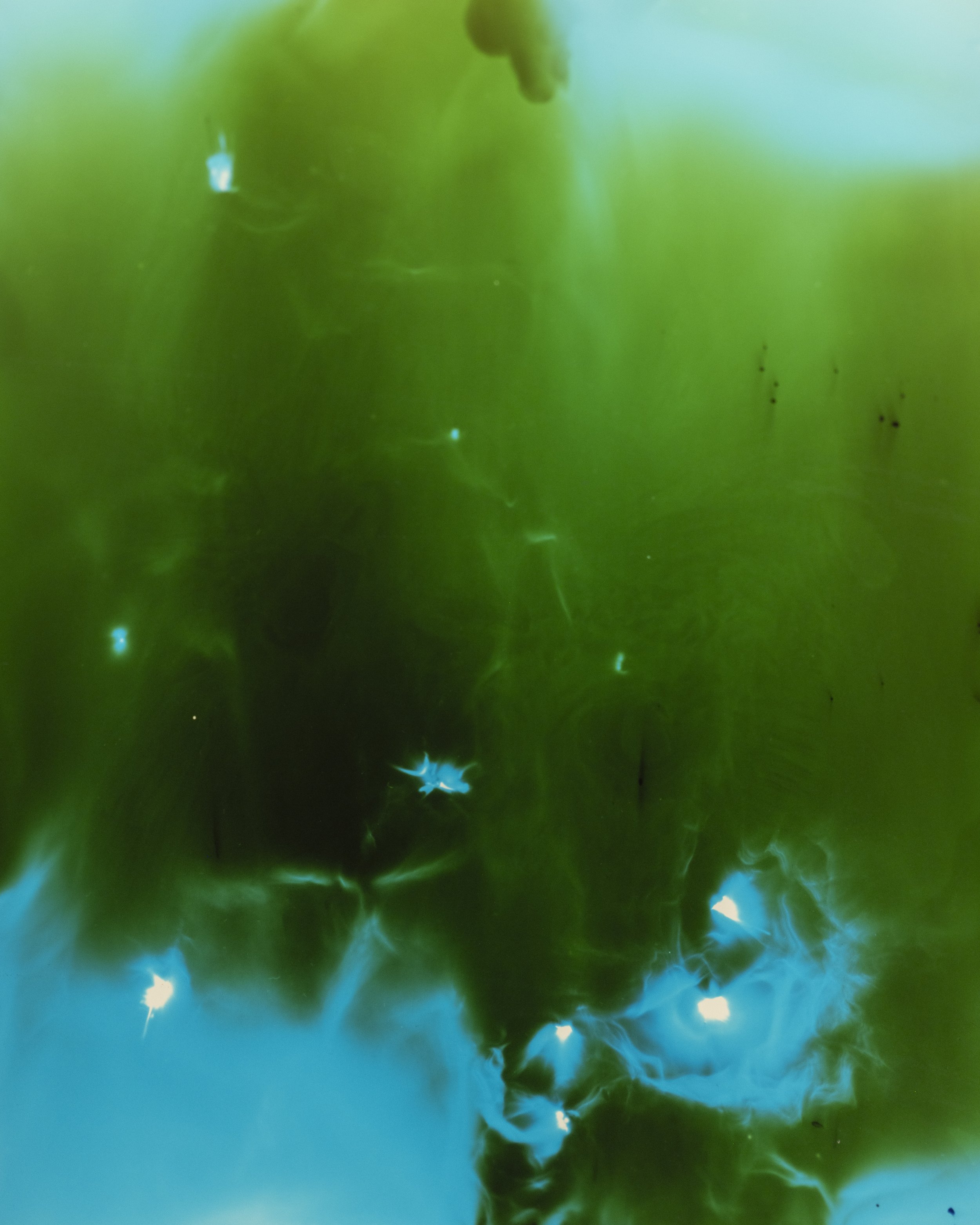
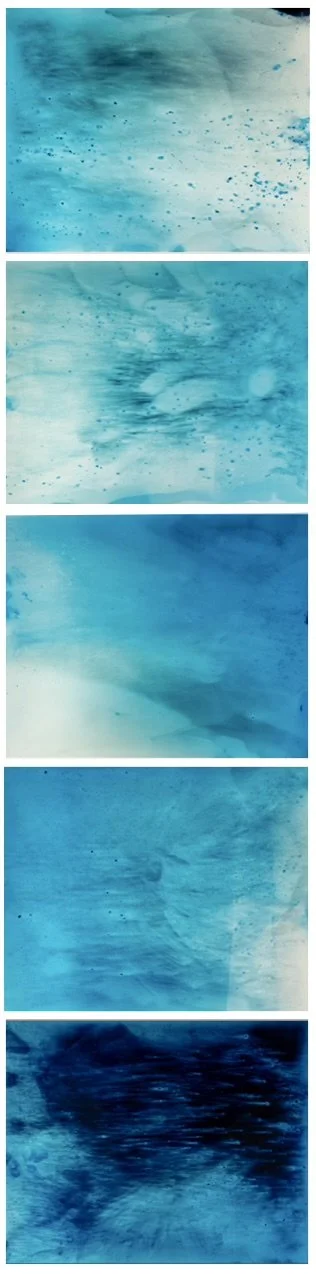
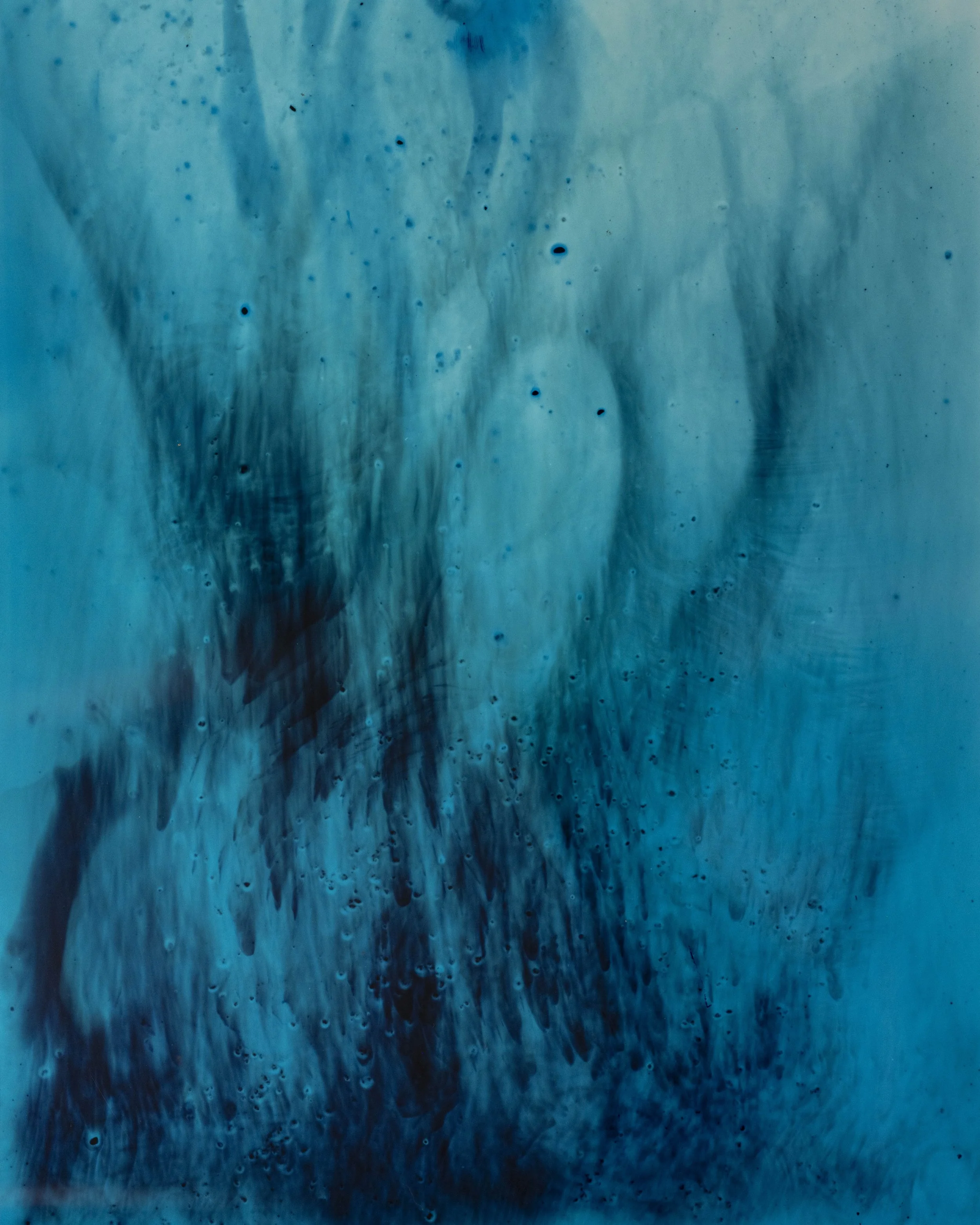
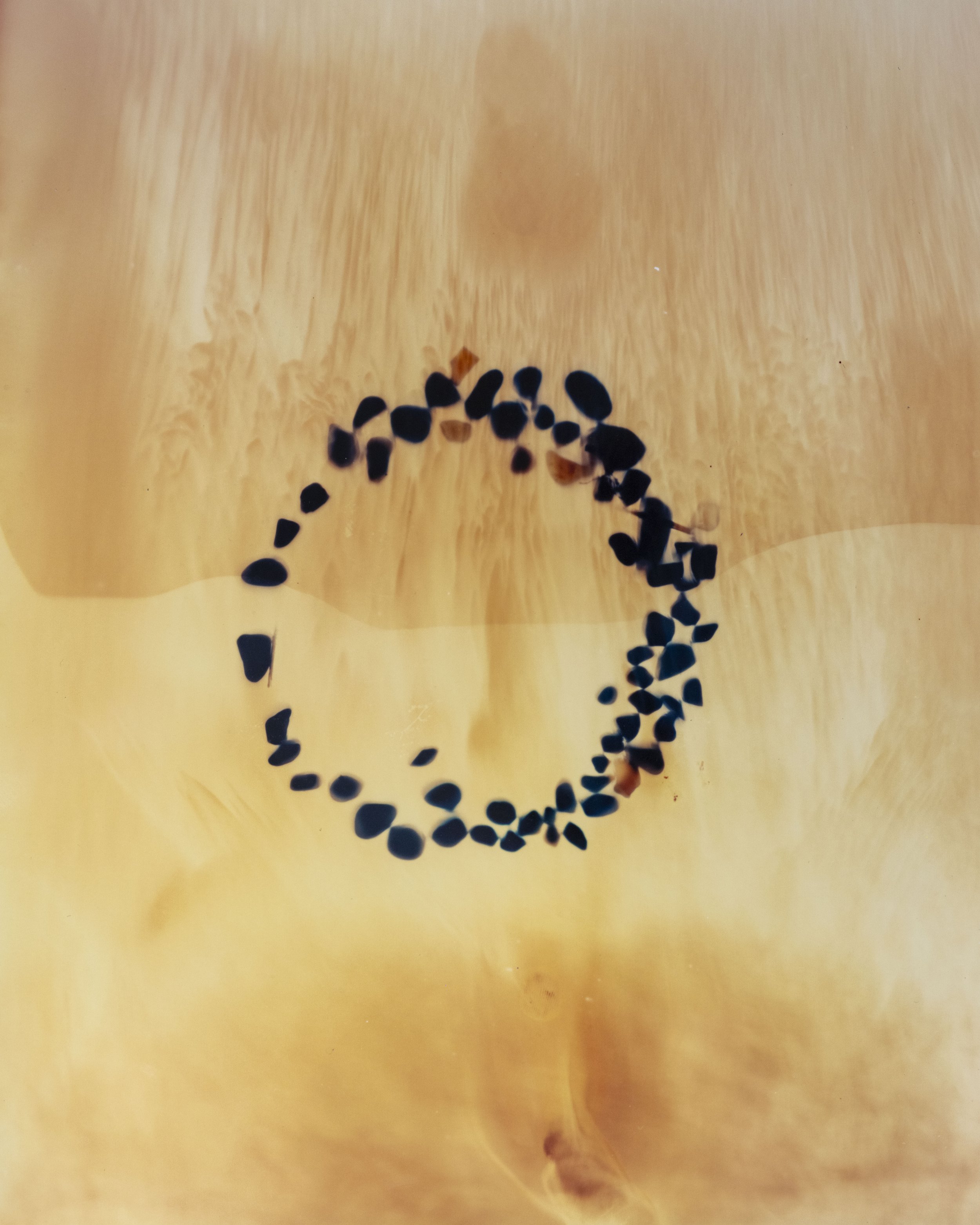
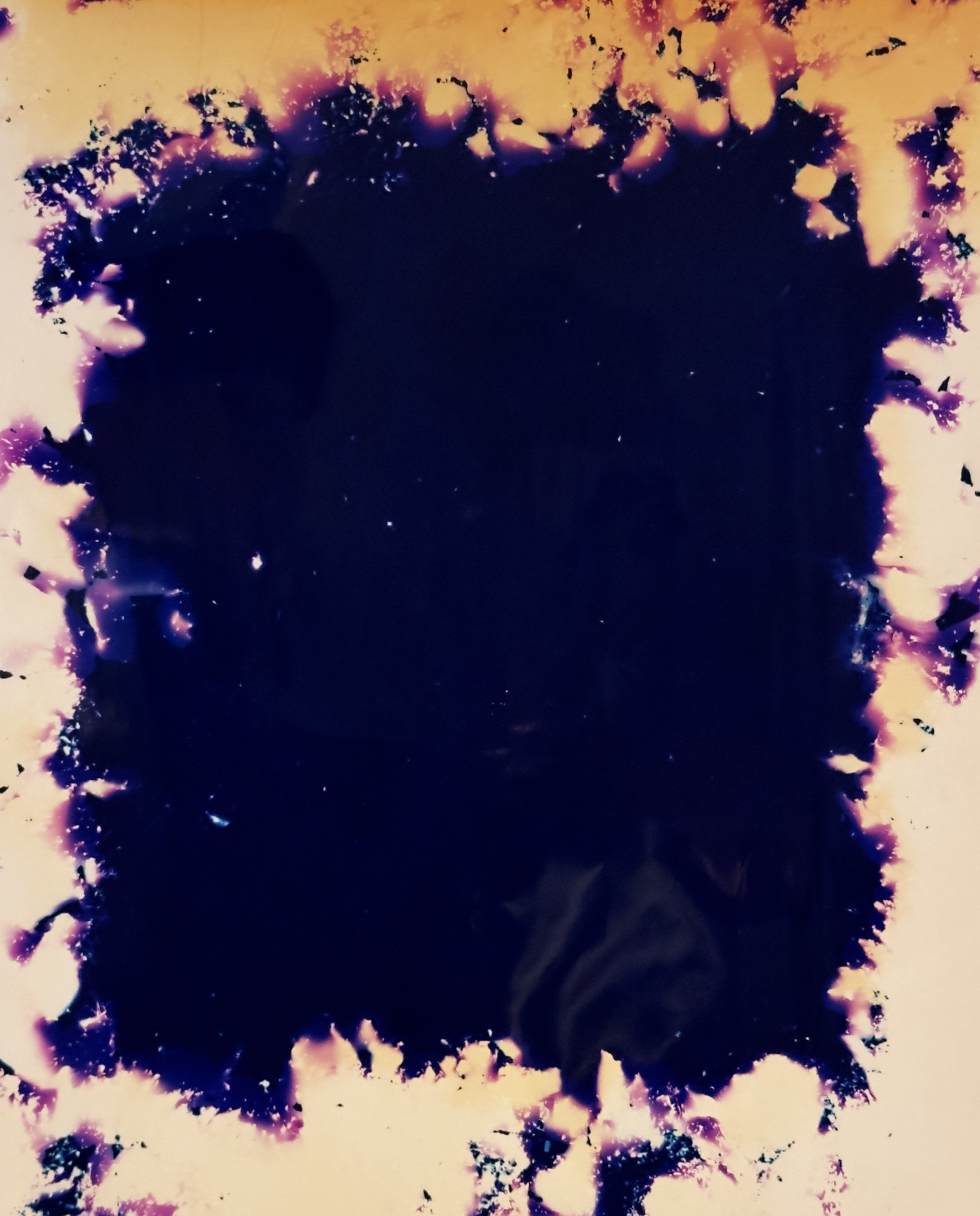
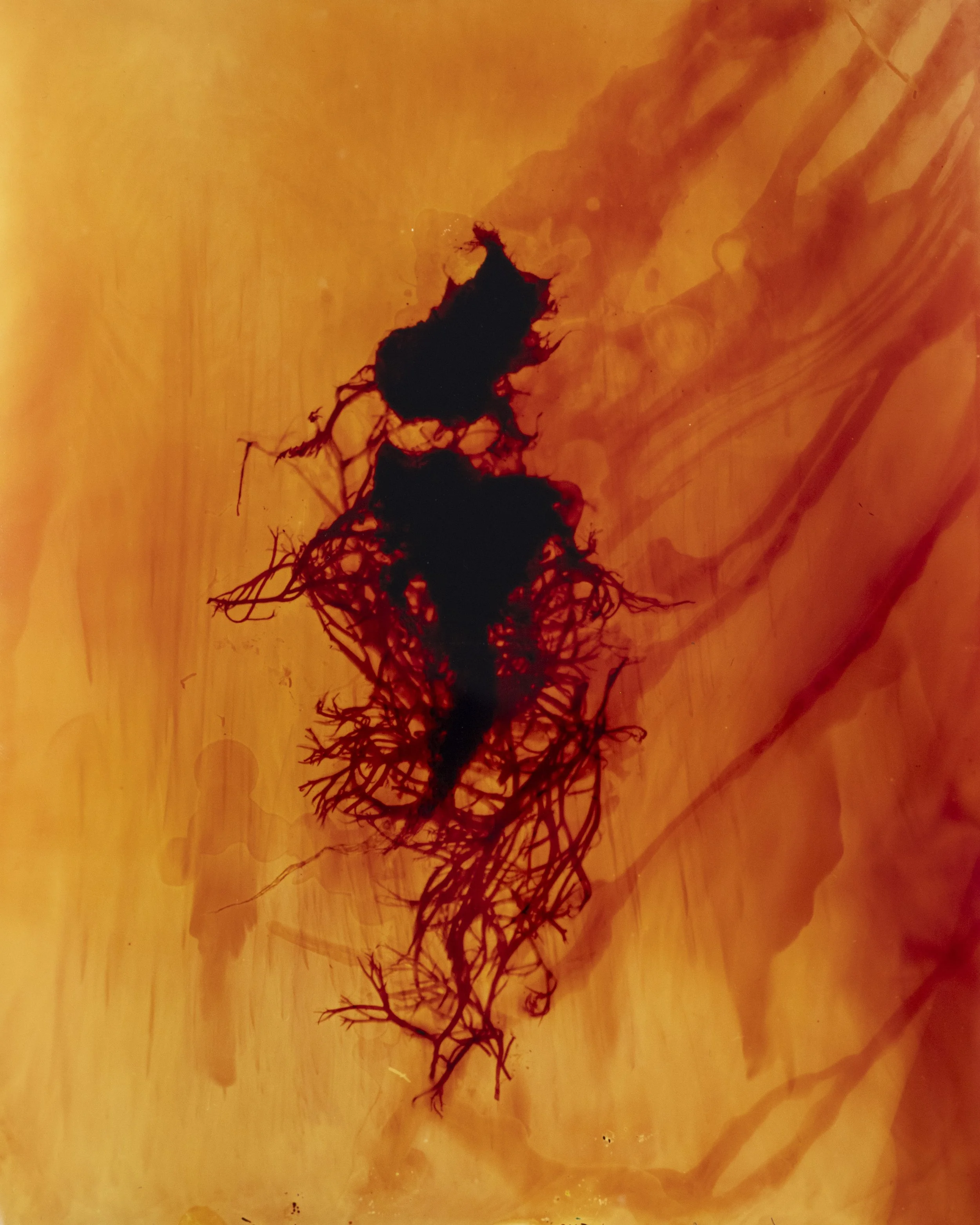
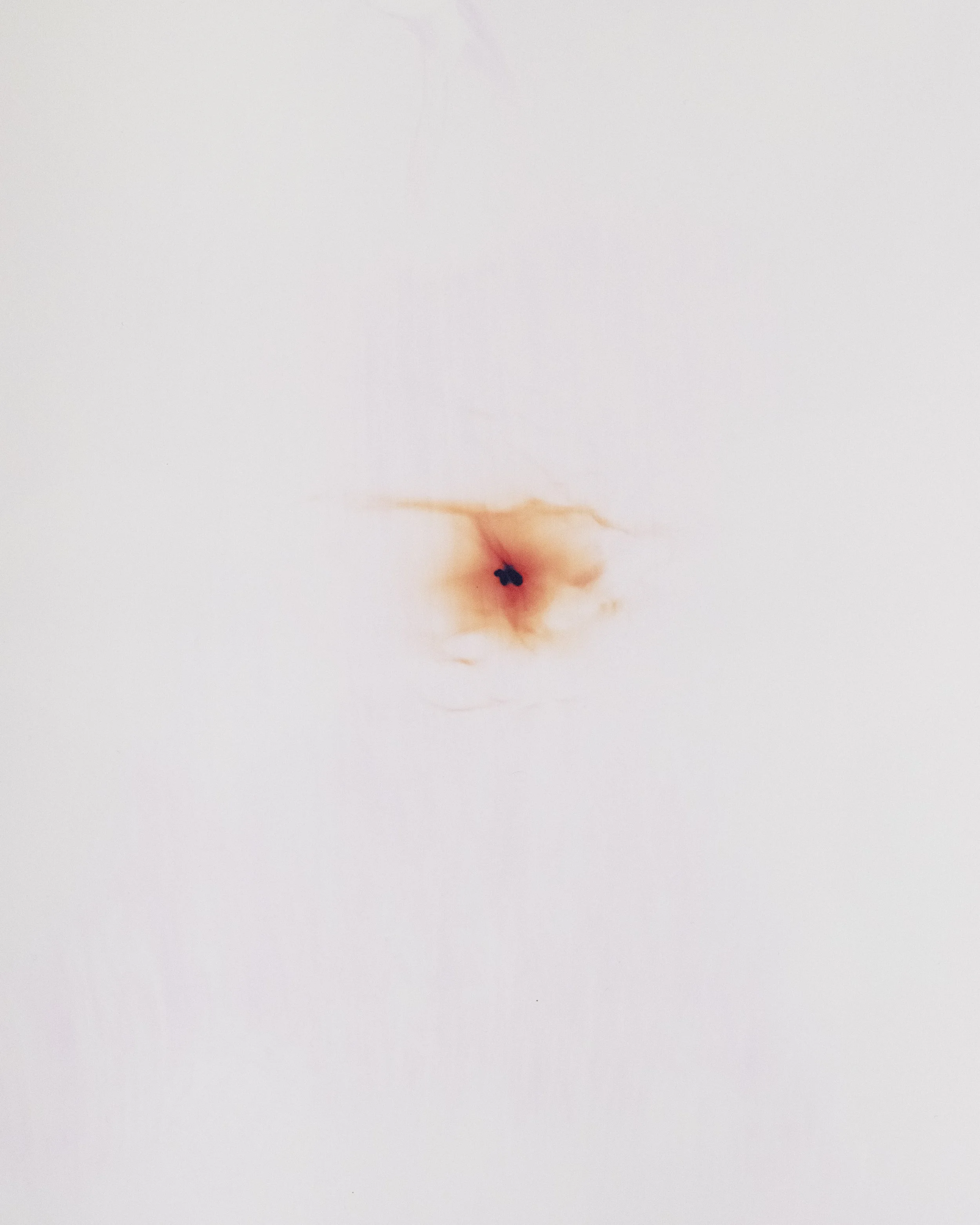
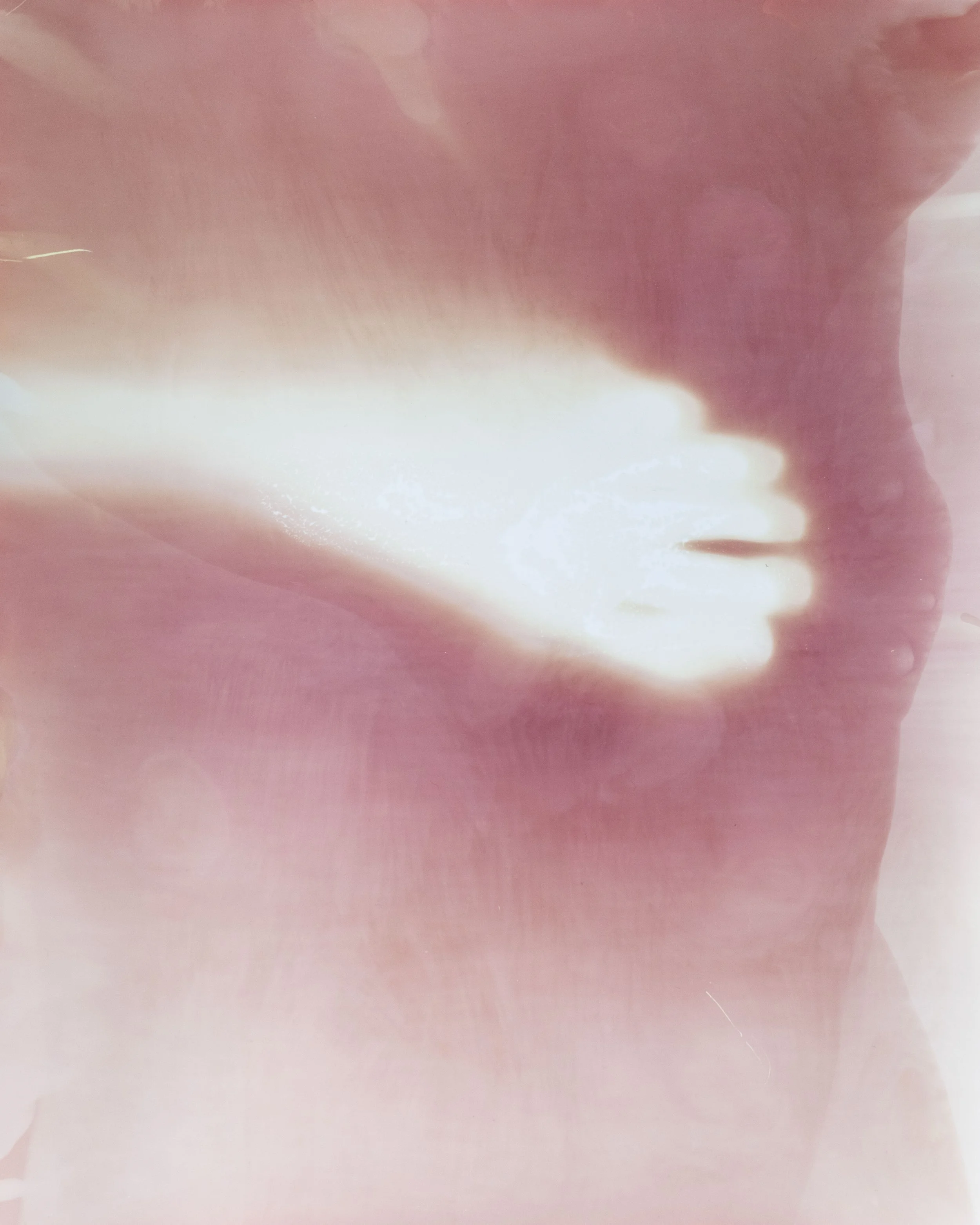
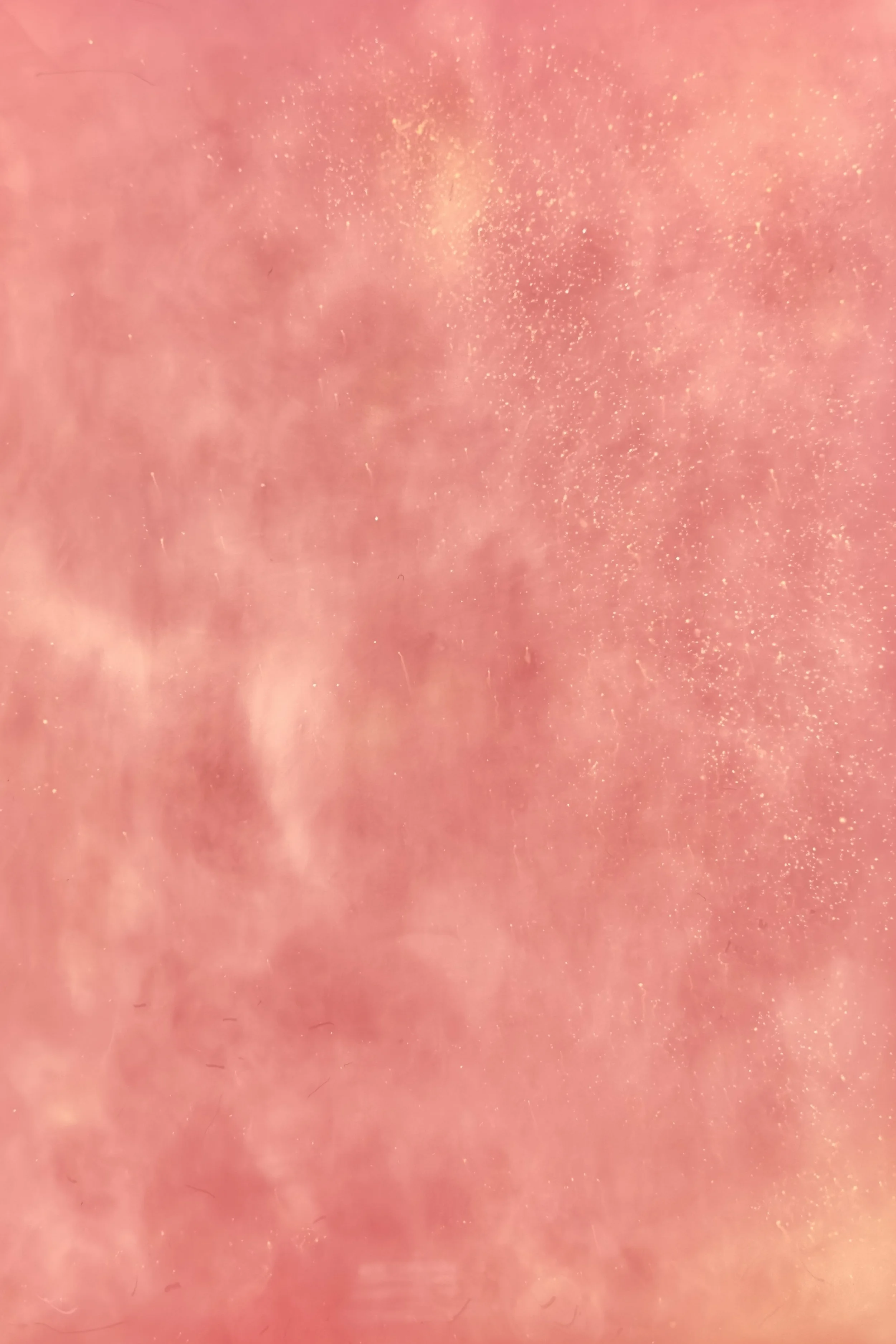
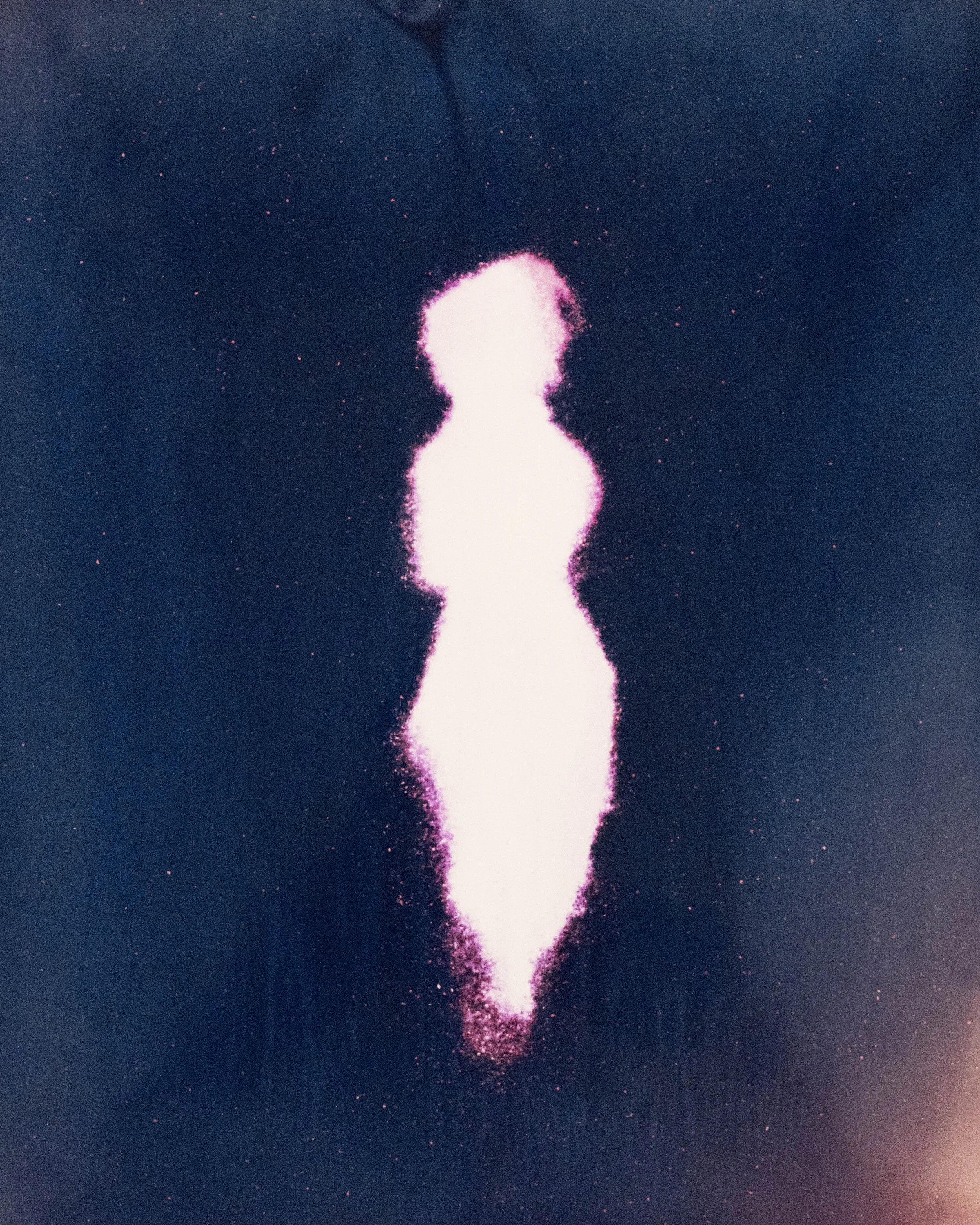
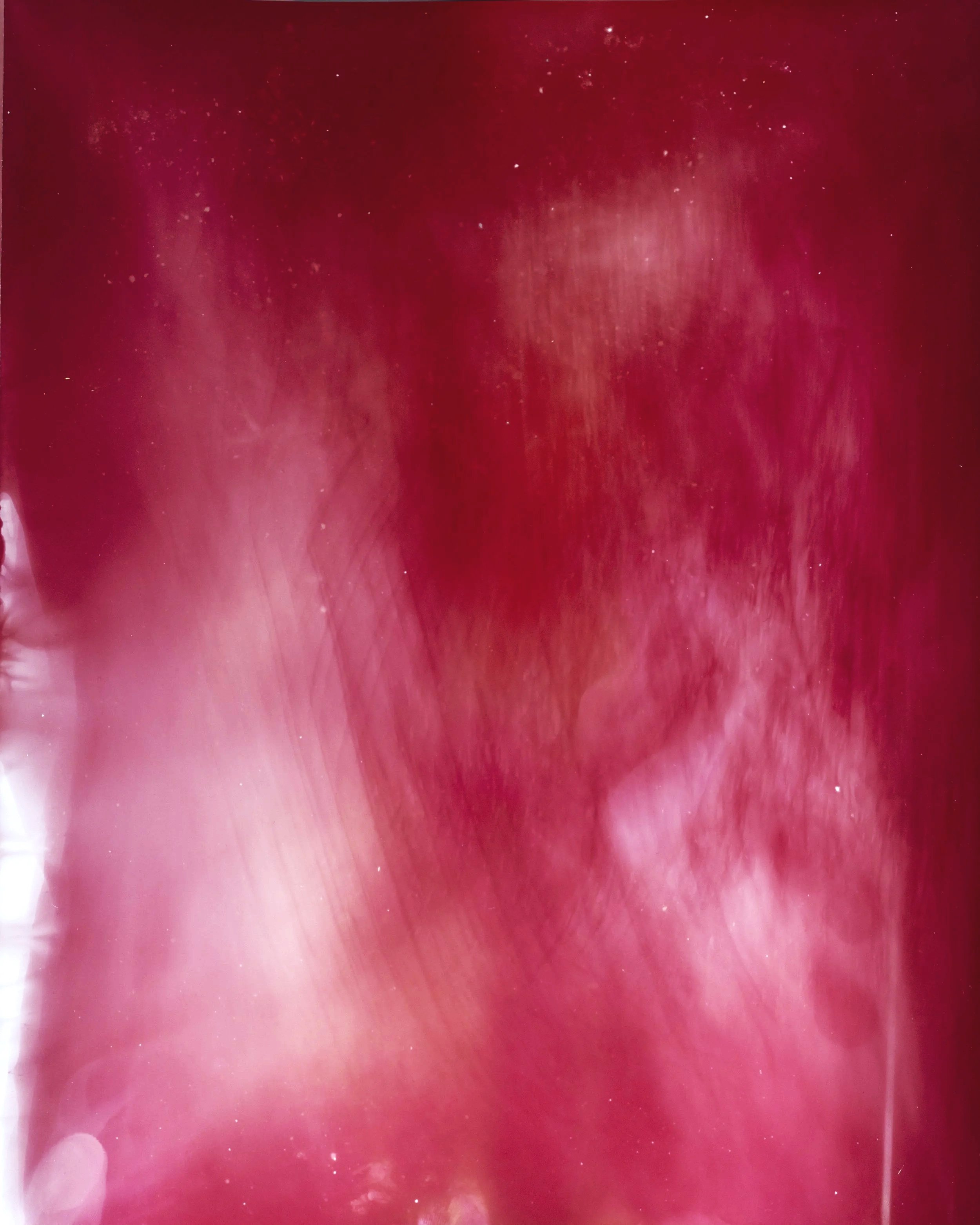
though my work is pure photography, I work camera-less. the photosensitive paper is exposed directly to the moonlight and bathed either in fluids from the ecosystems around me or in my bodily fluids.
My practice exists as a visual translation of an interest in mathematics, poetry and quantum physics, particularly regarding the nature of fractals as geometrical ratios and the interconnectedness of the laws of energy circulation.
Lying at the intersection of photography and sculpture, photosensitive paper is used as a sensor of the ecosystem our photosensitive bodies are living in. As an exercise on the limits of animism, I aim to see reality through the eyes of the only other creature who can communicate its ways of seeing: photosensitive paper. Therefore, I expose it to the same forces of the ecosystem my body is daily exposed to– the ocean water, the moonlight, the soil and its inhabitants, the filtered sunlight, my bodily fluids– and then develop it in makeshift darkrooms I build and dismantle for each piece.
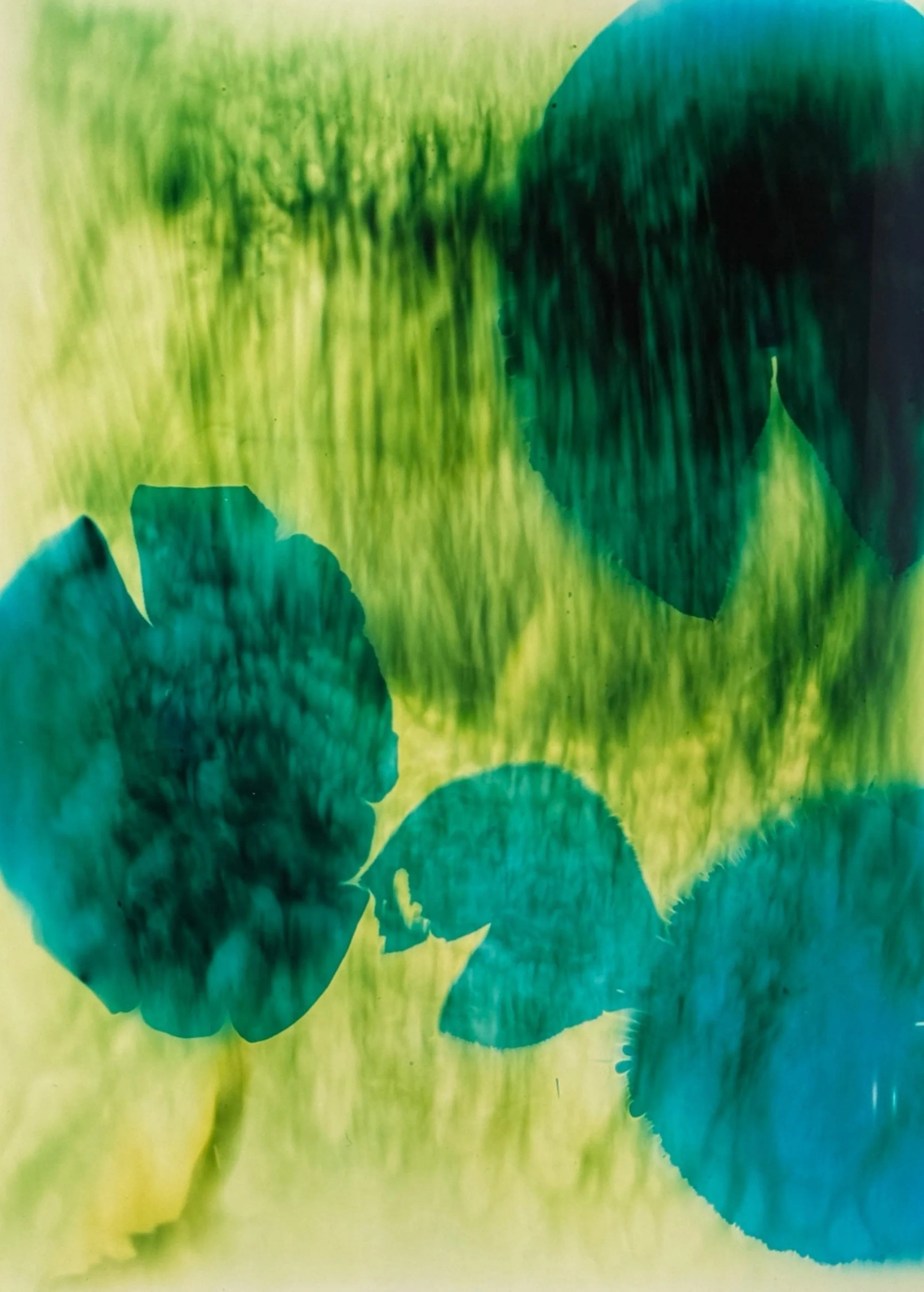
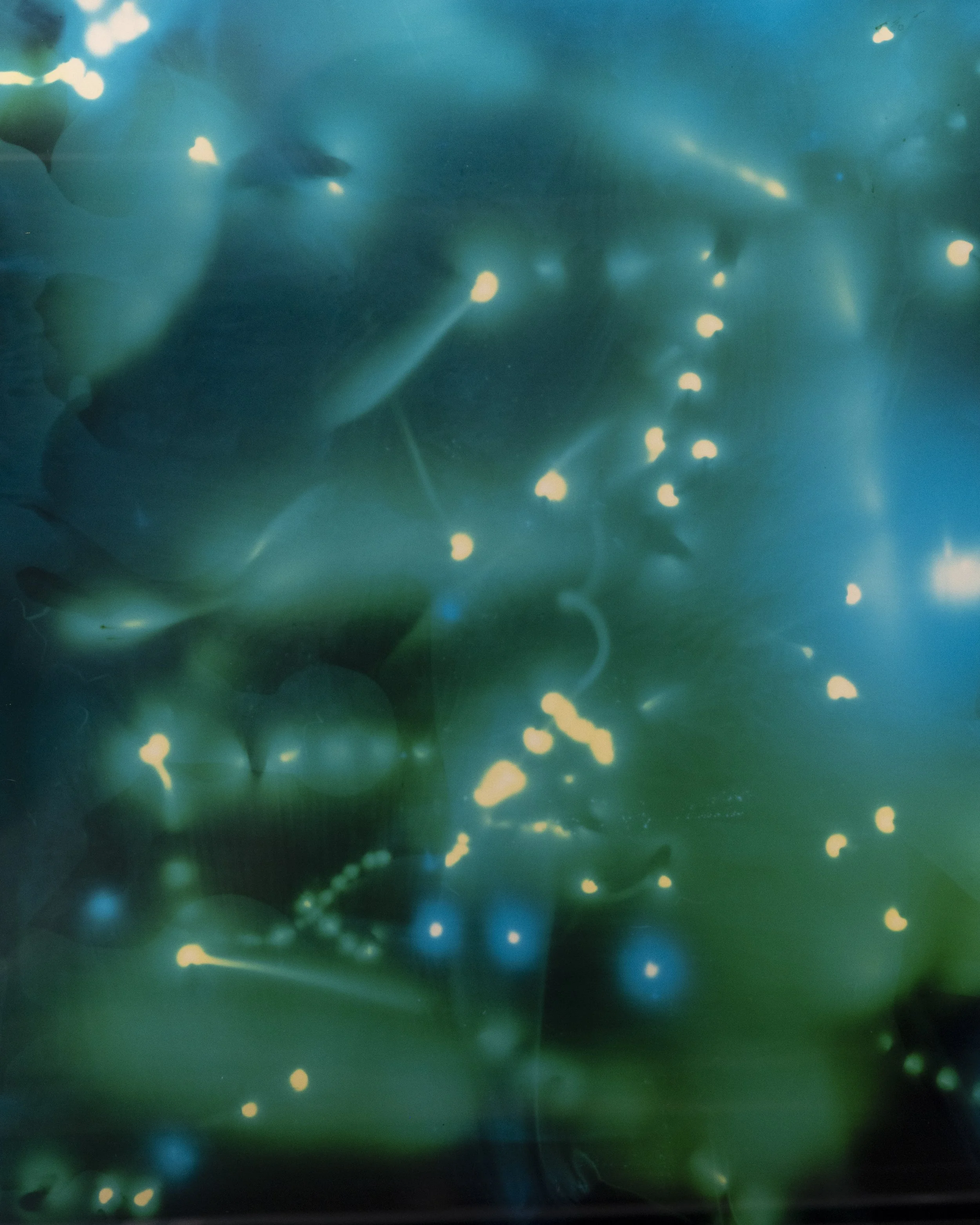
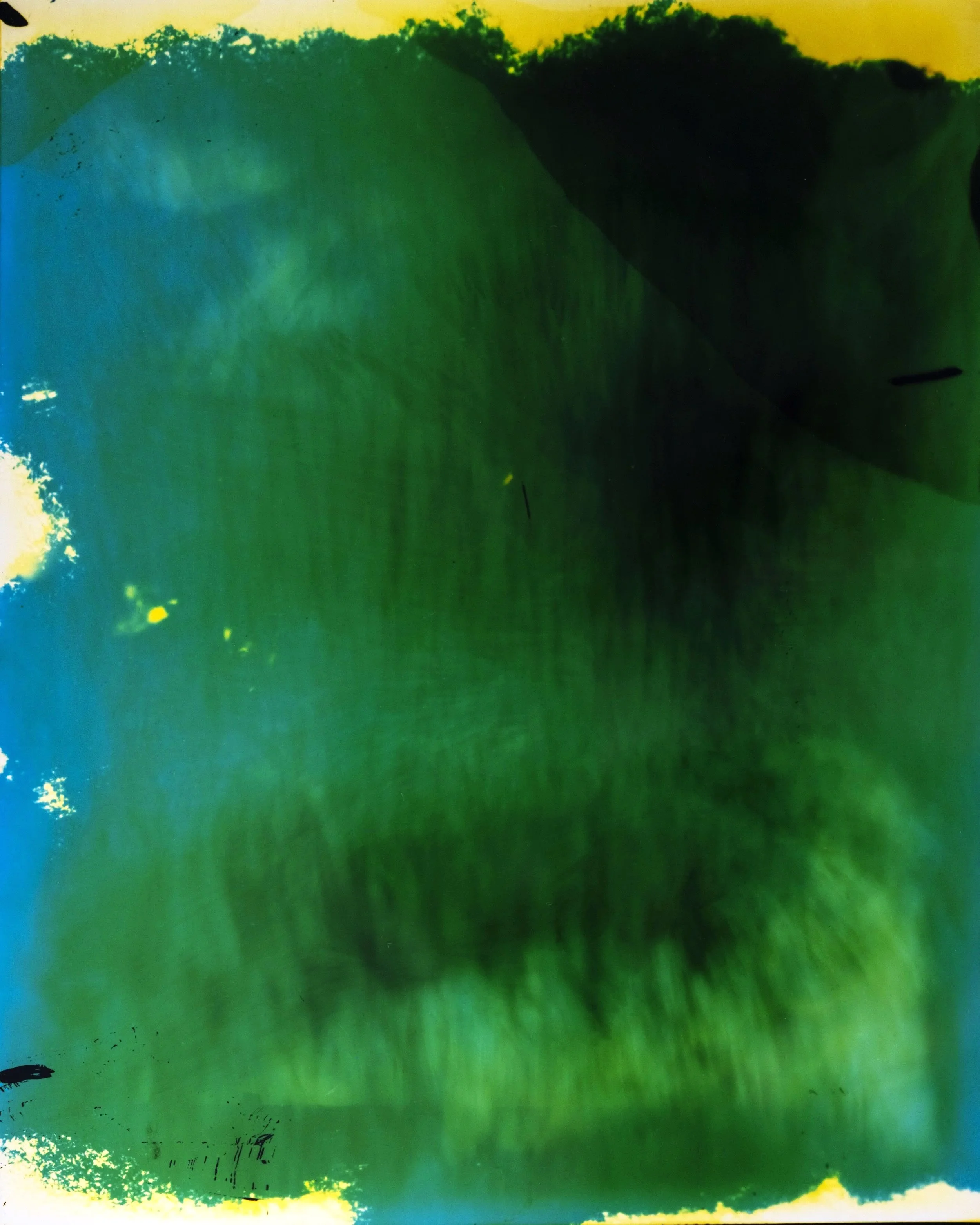
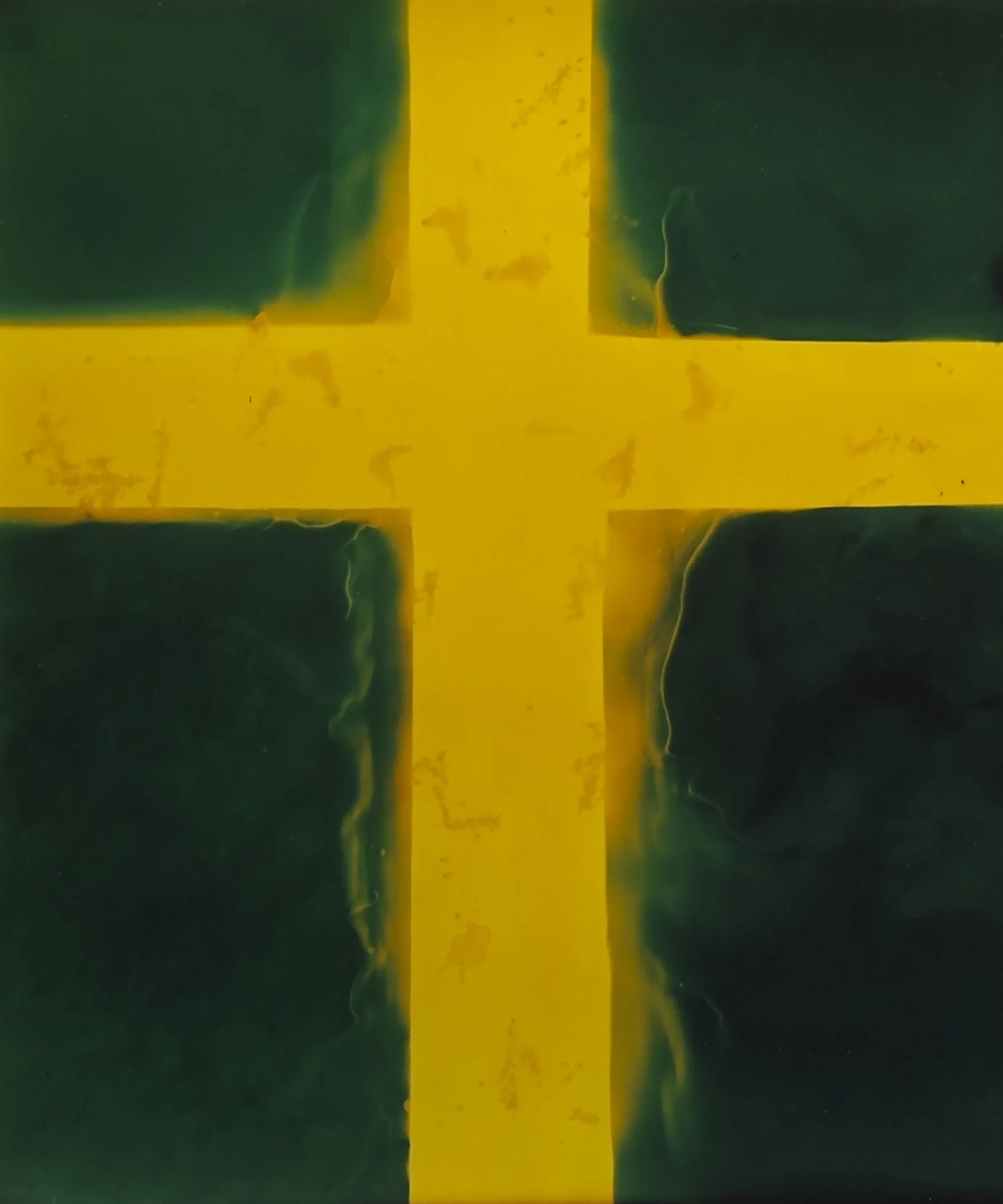
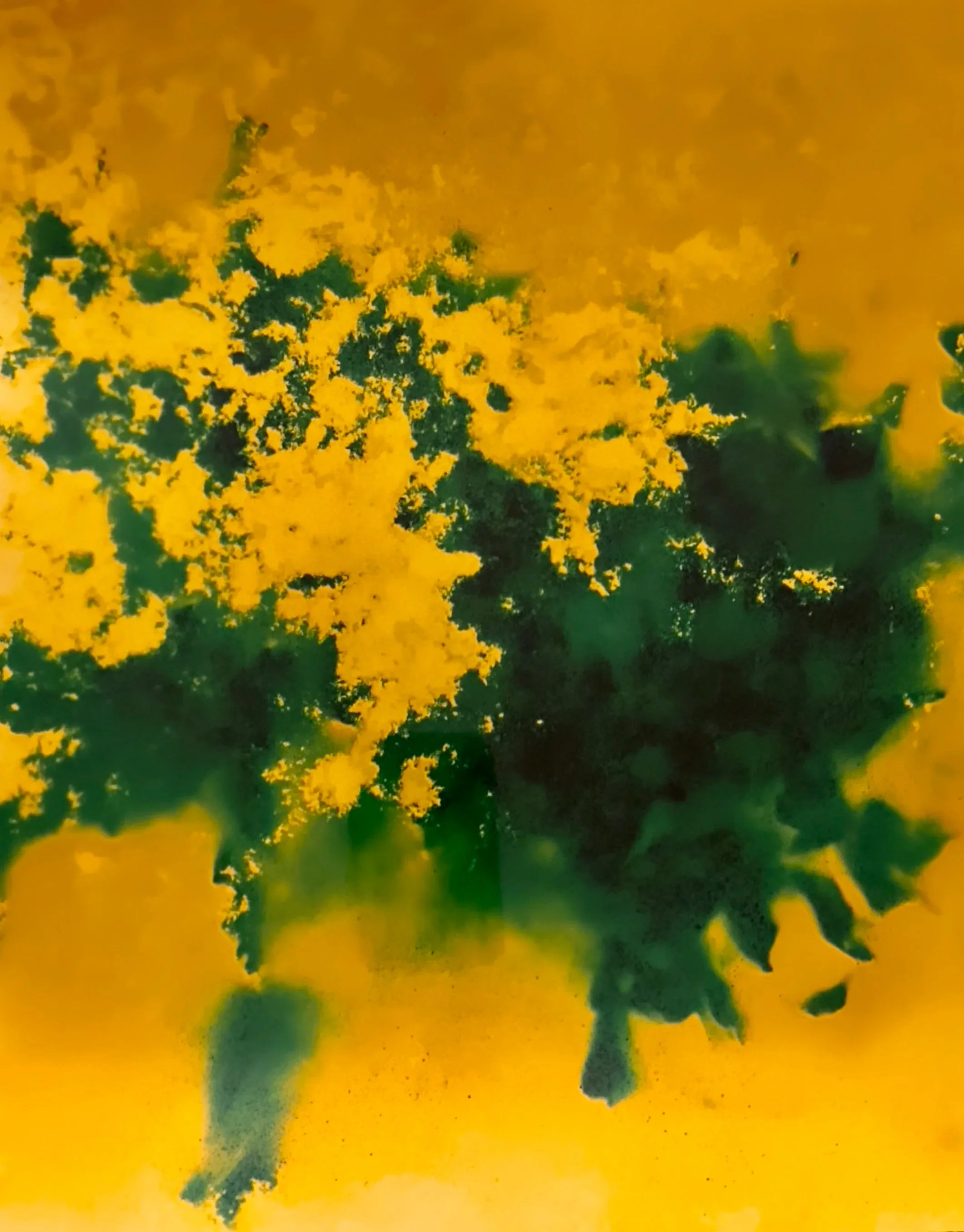
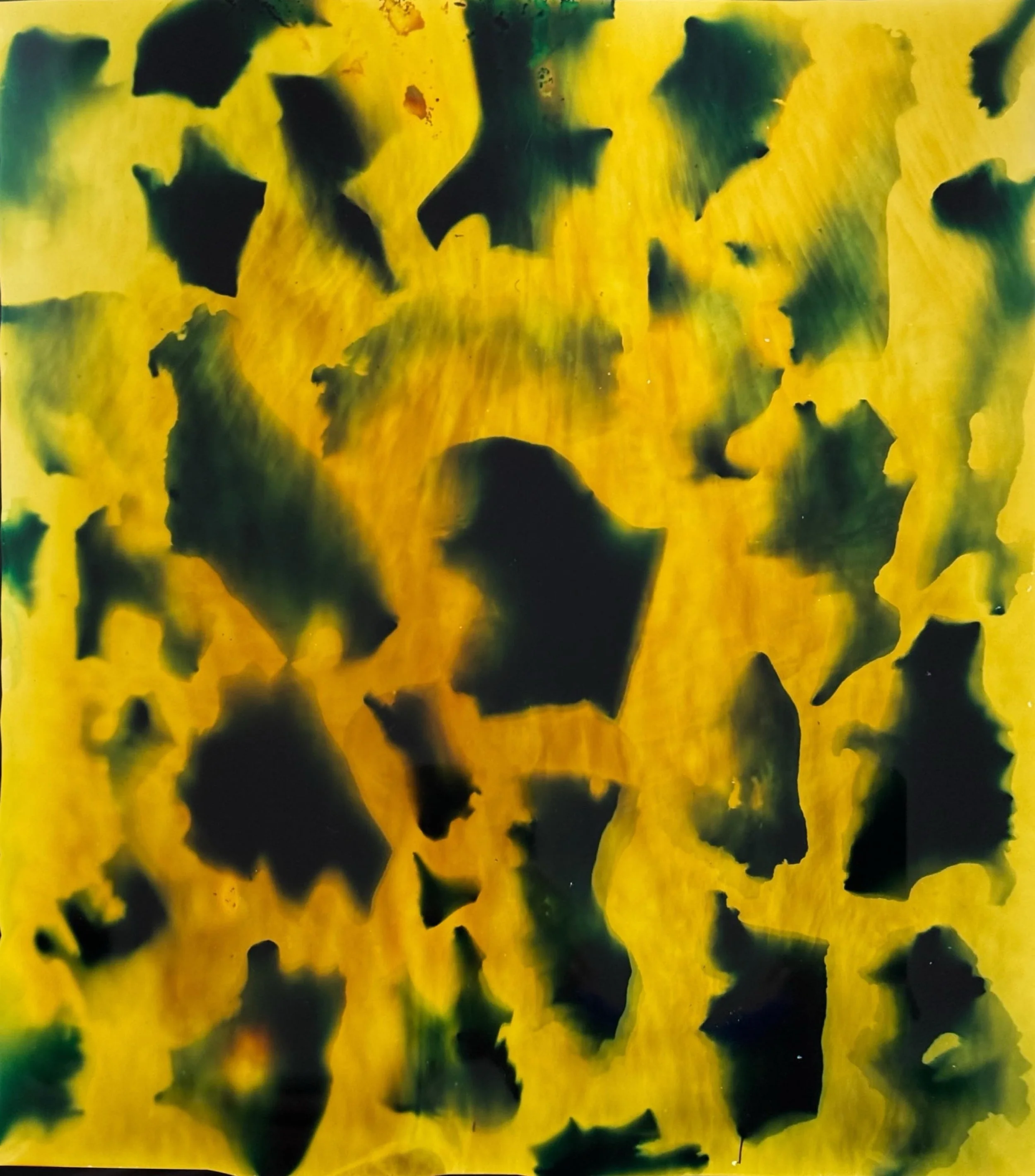
Chez Federica Belli, la représentation de la mer et de ses éléments constitue aussi une forme d’absolu – ce qui pourrait définir les recherches monochromatiques conceptuelles. […] Pour autant, elle n’affirme pas la primauté de l’œuvre sur la nature, comme sembla le faire Yves Klein. Sa démarche artistique se poste plutôt dans une recherche d’humilité, comme une porte ouverte à tous les vents, où la nature sans cesse par ses flux et ses situations, l’influence. […] Dans un troisième geste, elle développe ce même papier avec un ensemble de fluides qui viennent de son propre corps (salive, sueurs, urines, sang). Ces impressions donnent à l’opposé des tirages marins des ensembles monochromatiques rougis ou orangés – dans un mouvement là aussi inverse à Klein ; de la nature vers l’absolu chez ce dernier quand Federica Belli part de la nature pour revenir à son corps, à son aspect primaire.
Dans ces trois chapitres — l’eau, la terre, le corps — il se forme l’idée que l’artiste, et donc par transposition, l’humain, est un corps pris dans un ensemble de fluides, de dynamiques, d’émerveillements portés et charriés par la nature. Un être charrié par différentes forces, parfois grand ouvert à son environnement naturel.
Arthur Dayras pour L’Œil de la Photographie
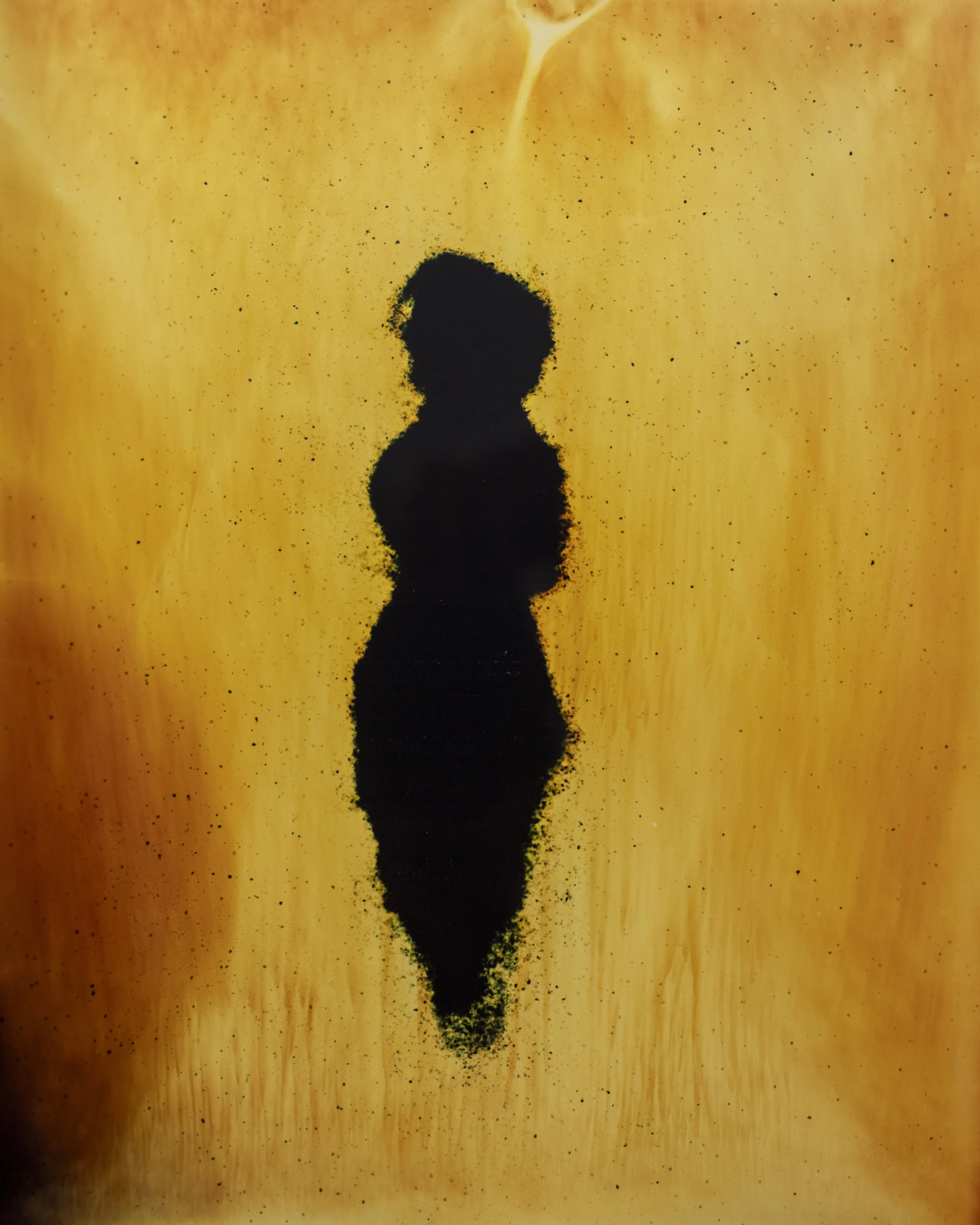
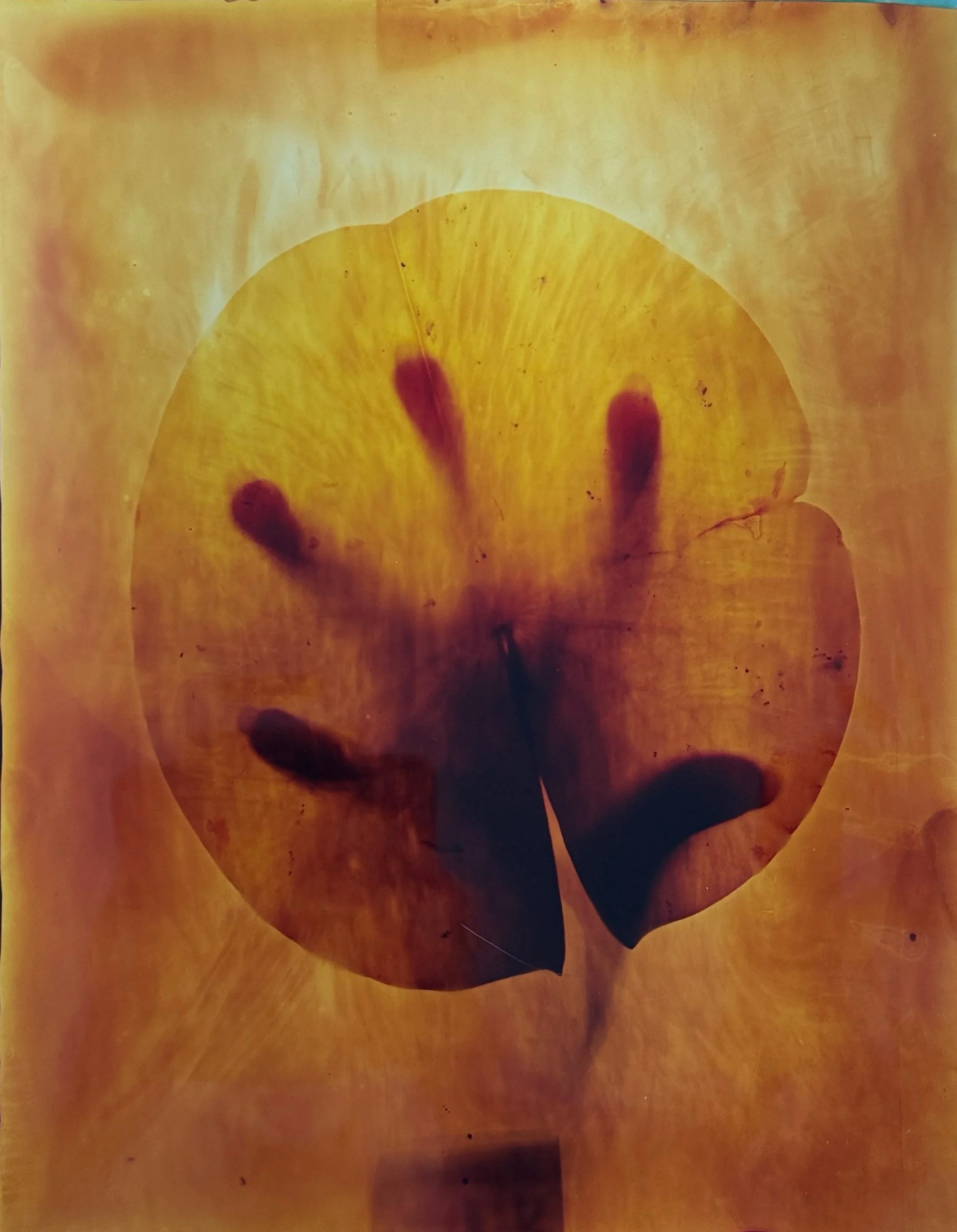
“Ce qui nous unit n’est pas la peau, rigide et tendre, pas les mains, calleuses et vives, pas le sol que nous foulons chaque jour, pas la surface des choses que nous aimons tant caresser du bout des doigts en pensant la posséder, pas le vêtement qui nous alourdit, pas l’apparence qui nous colle, pas même l’image, l’idée fixe, l’étiquette, le nom, le titre. Ce qui nous unit se trouve ailleurs. Comme nous, liquide est le lien. L’humain est un animal océanique, possédant des courants, des marées, des éclipses, des vagues. Toutes sortes de fluides. Comme la terre habitée, ce qui nous unie se propage, perdure en mouvement, nous échappe et nous libère. Des fluides.
Dans le nouveau versant de son oeuvre, Federica Belli traque le fluide à l’aide de la photographie. Paradoxalement, elle fige ce qui en elle, autour d’elle, coule, remue, bouscule, s’évapore pour mieux se réinventer. Ce travail est d’abord une recherche intime. Federica Belli photographie son sang, sa sueur, ses larmes — tous les fluides corporels qui, dans leurs sillages, la composent, l’arriment et la sculptent. Mais Federica Belli regarde aussi autour d’elle. Quête primordiale. De l’intime, elle passe à l’élément, à l’élémentaire : feu, mer, vent. Là aussi, du mouvement. Là encore, des fluides.
La photographier, née dans le liquide amniotique d’une chambre noire utérine, s’empare du mouvement liquide. Federica Belli est là pour nous rappeler notre nature, océanique et vaste, mouvante et humide. Nous sommes, après tout, des êtres aqueux. Des gouttes qui coulent, trop brusquement, sur les joues du monde. Nous sommes salés. Nous sommes lacrymaux. Nous sommes fluides. “
Texte de Boris Bergmann
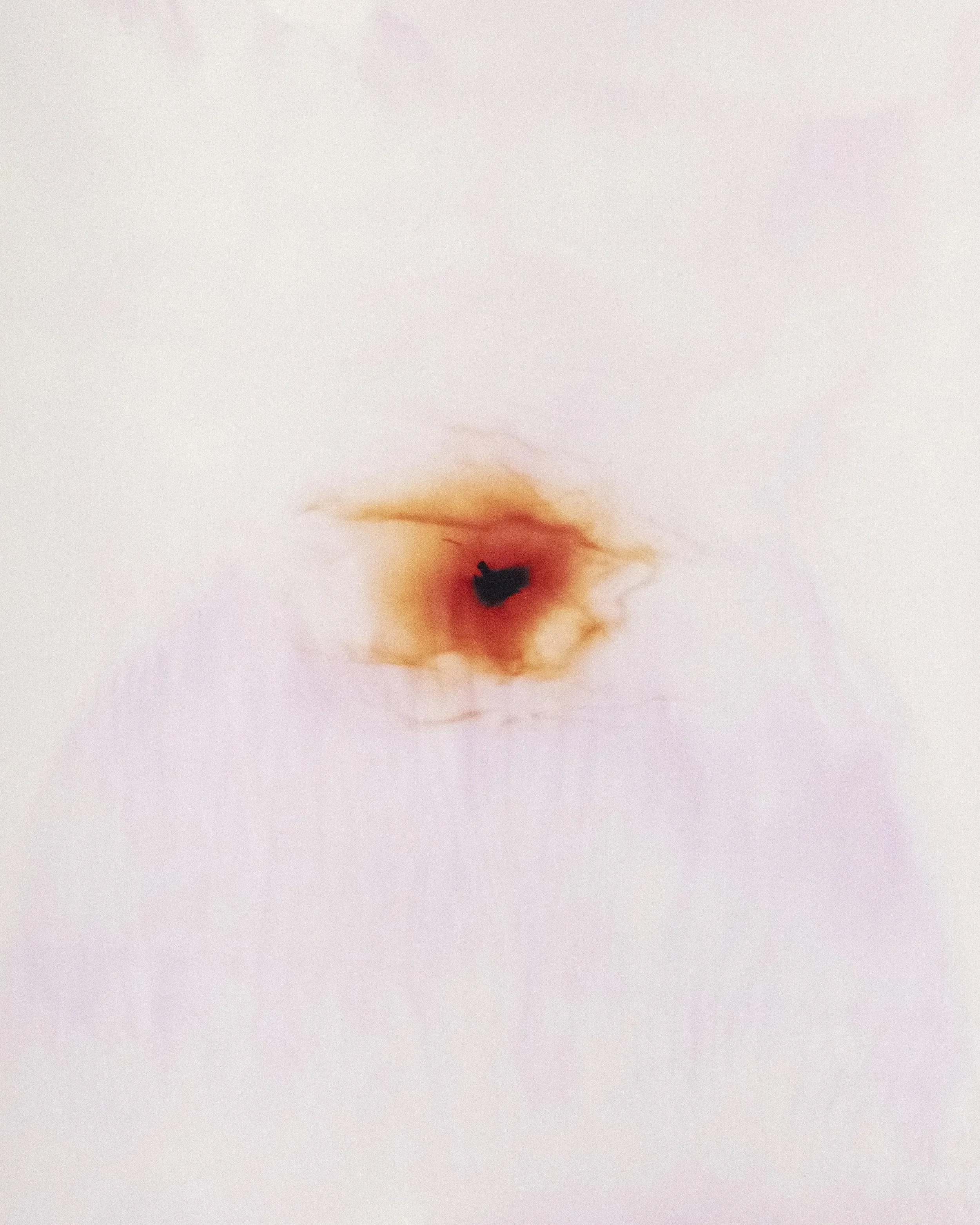
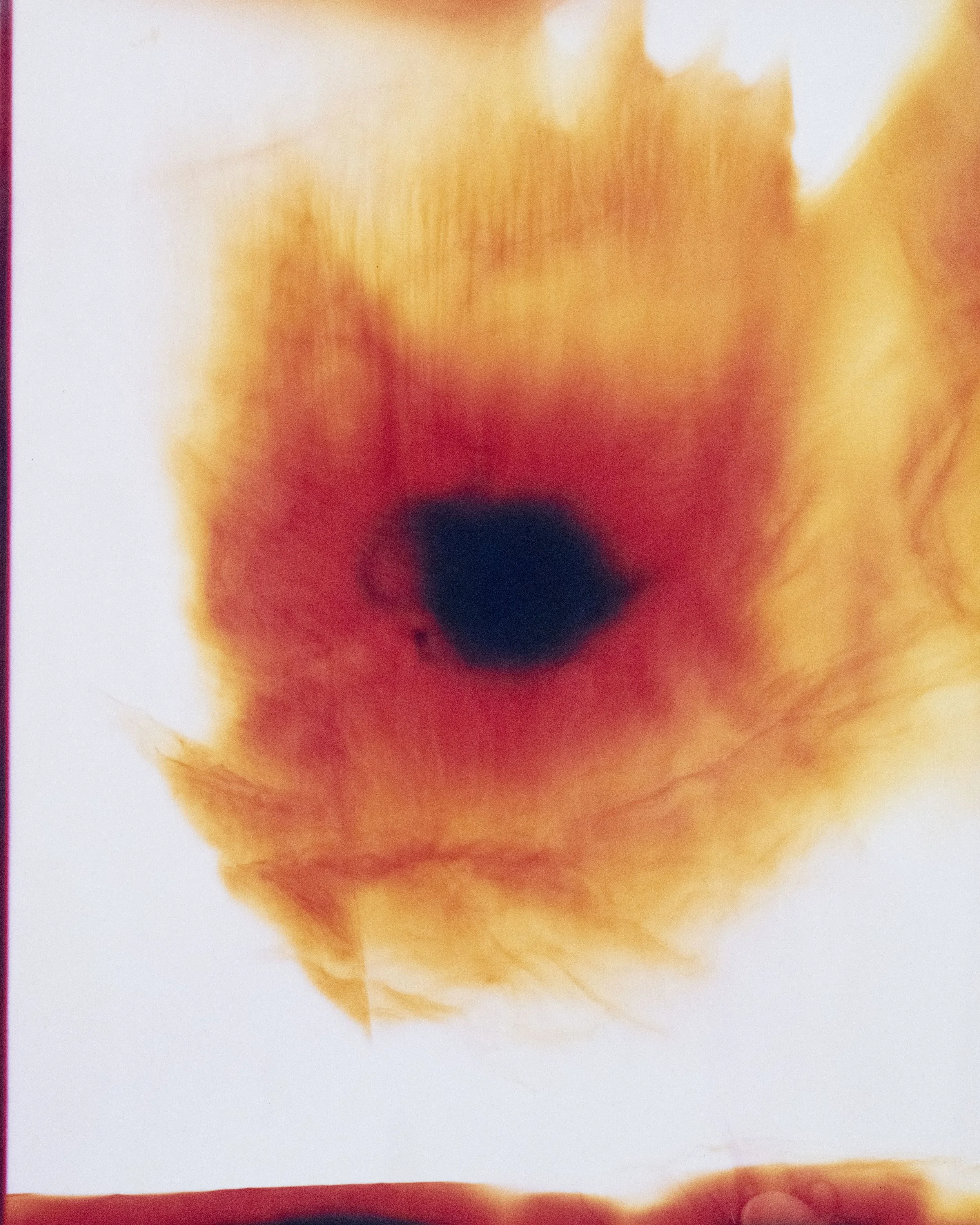
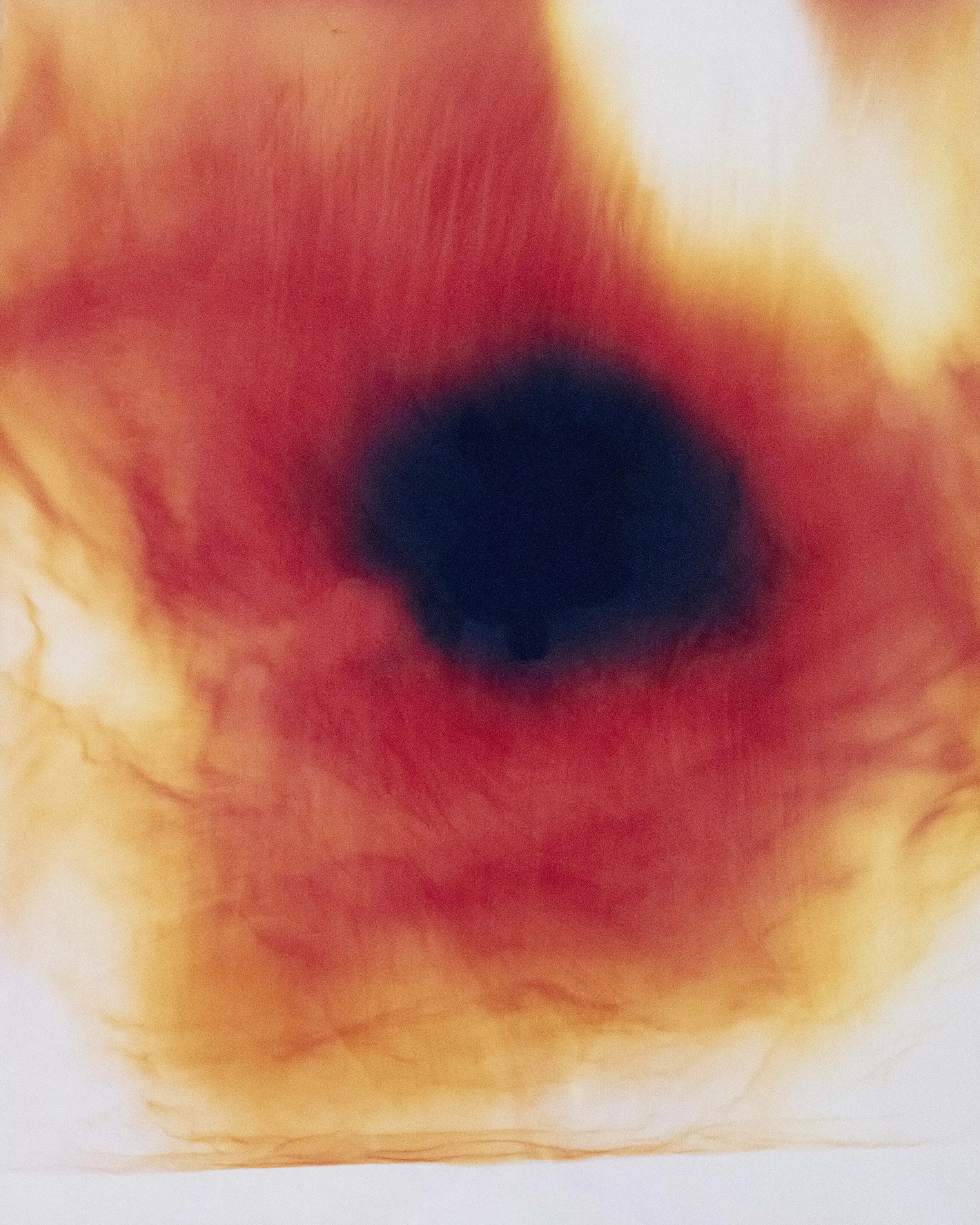
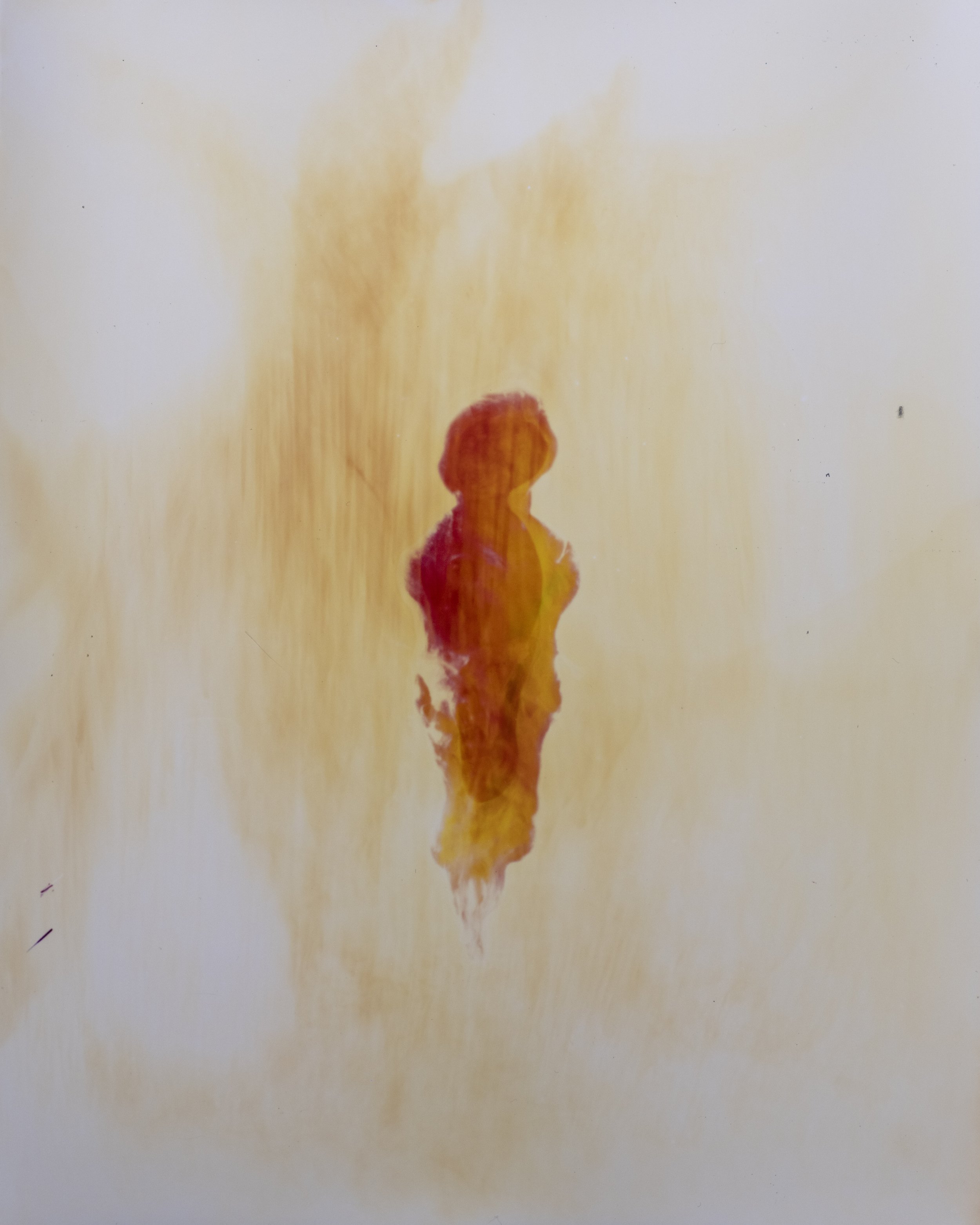
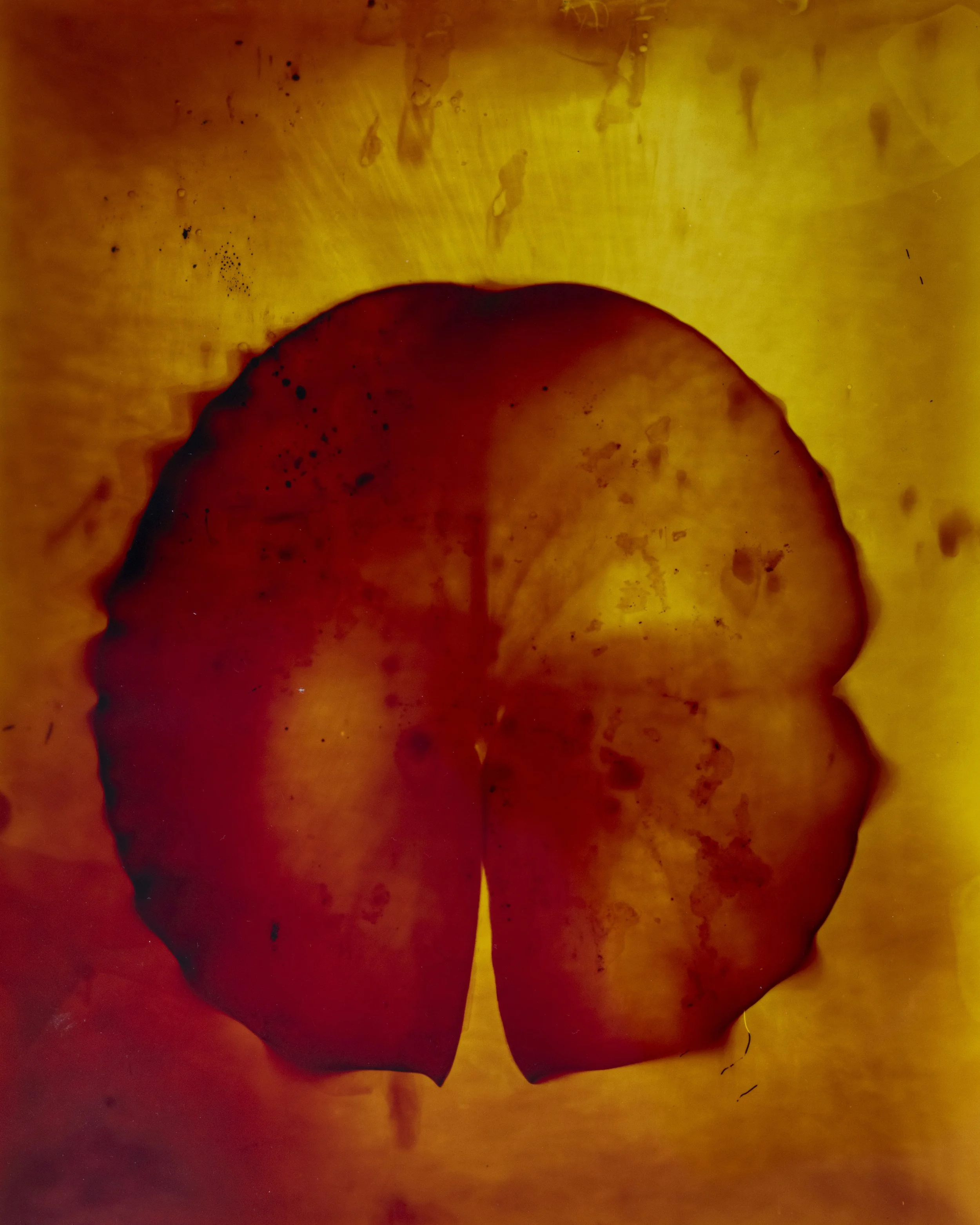
“One hesitates to call it courage, the patience required to wait upon the world rather than seize it, yet something of that patience surfaces, unmistakably, in the work of a young woman who has renounced the lens, the eye, the whole confident machinery of human looking, and has chosen instead to let the sea write upon her paper what no hand could compose.”
Marc Olivier Whaler for The Wick
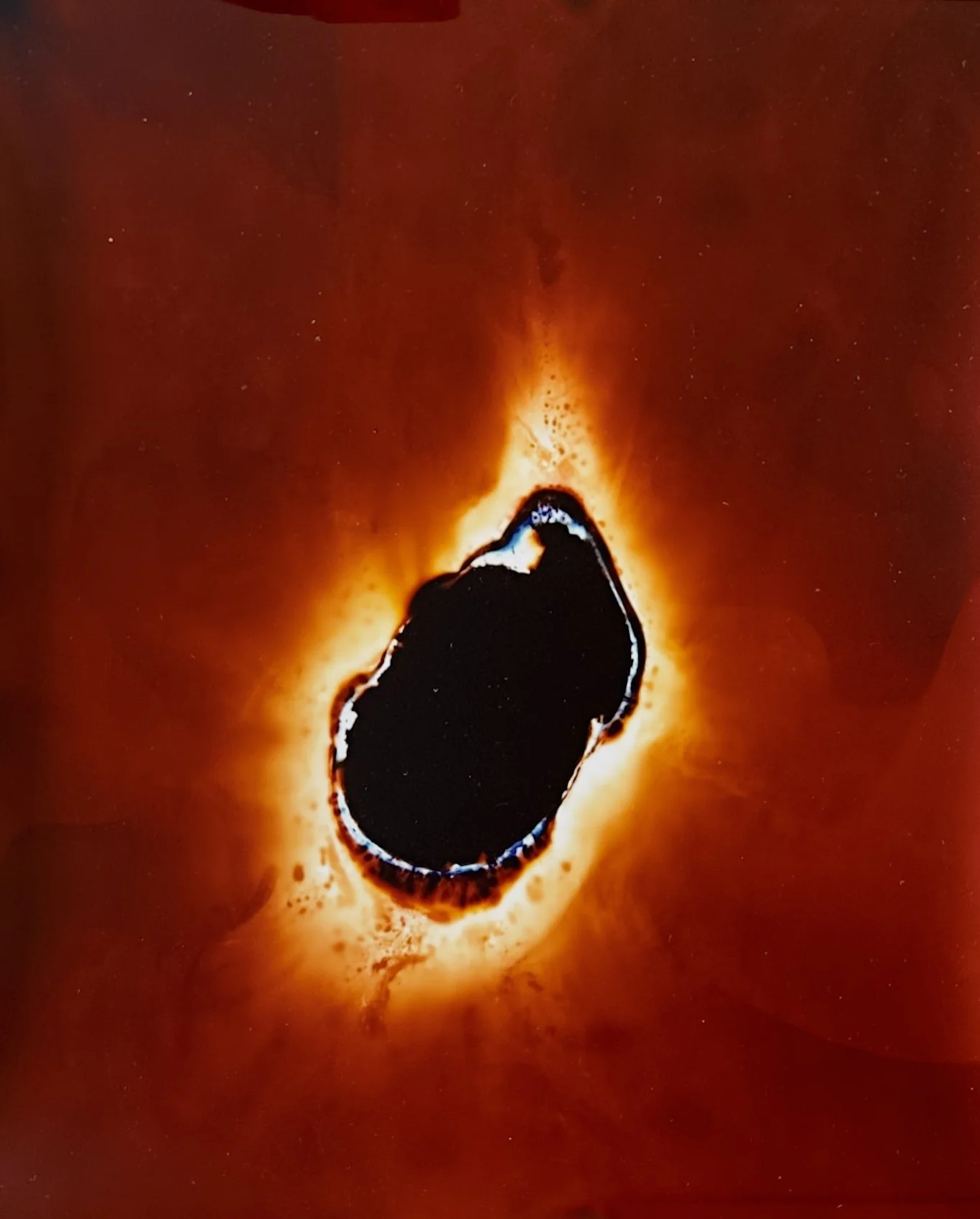
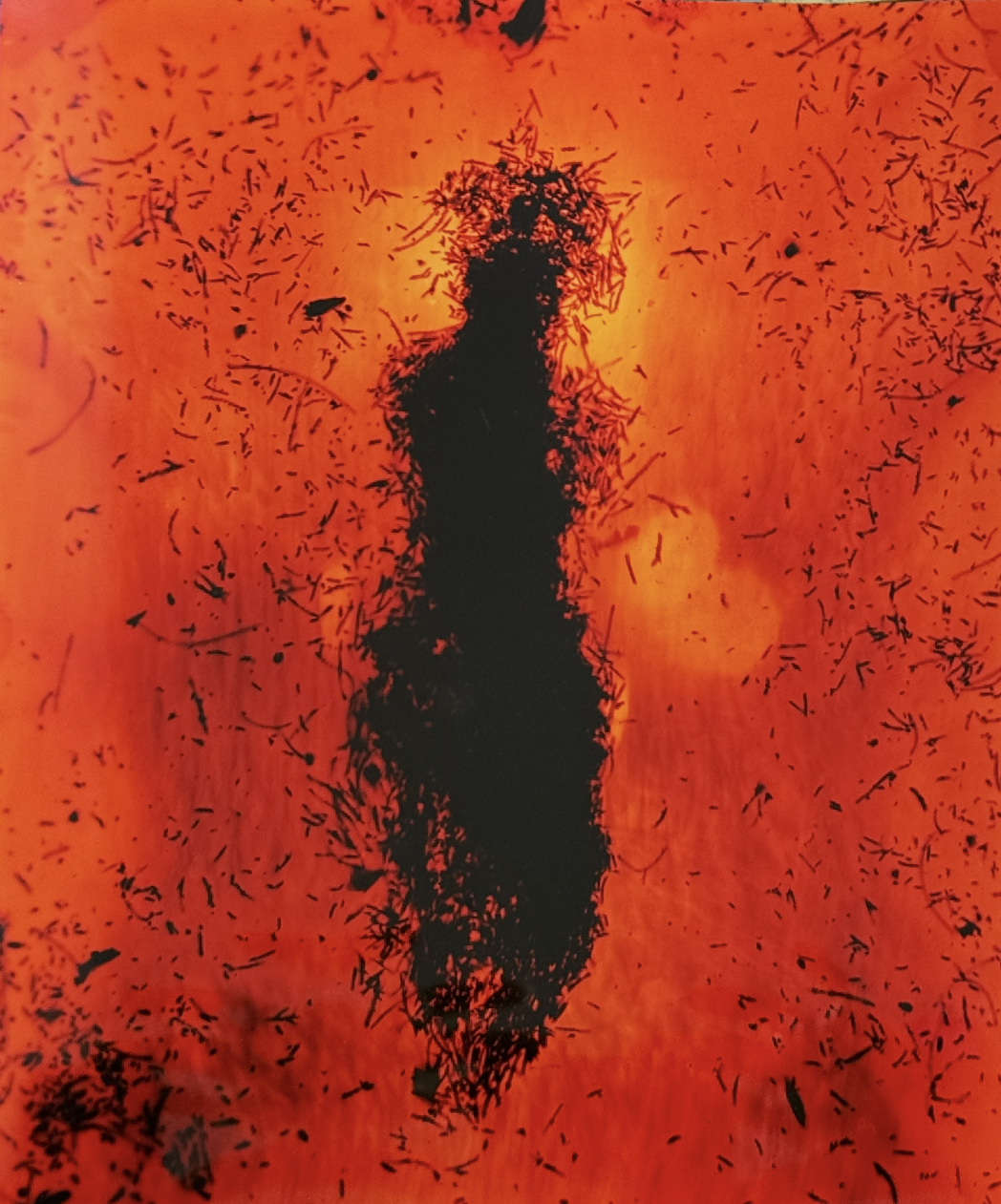
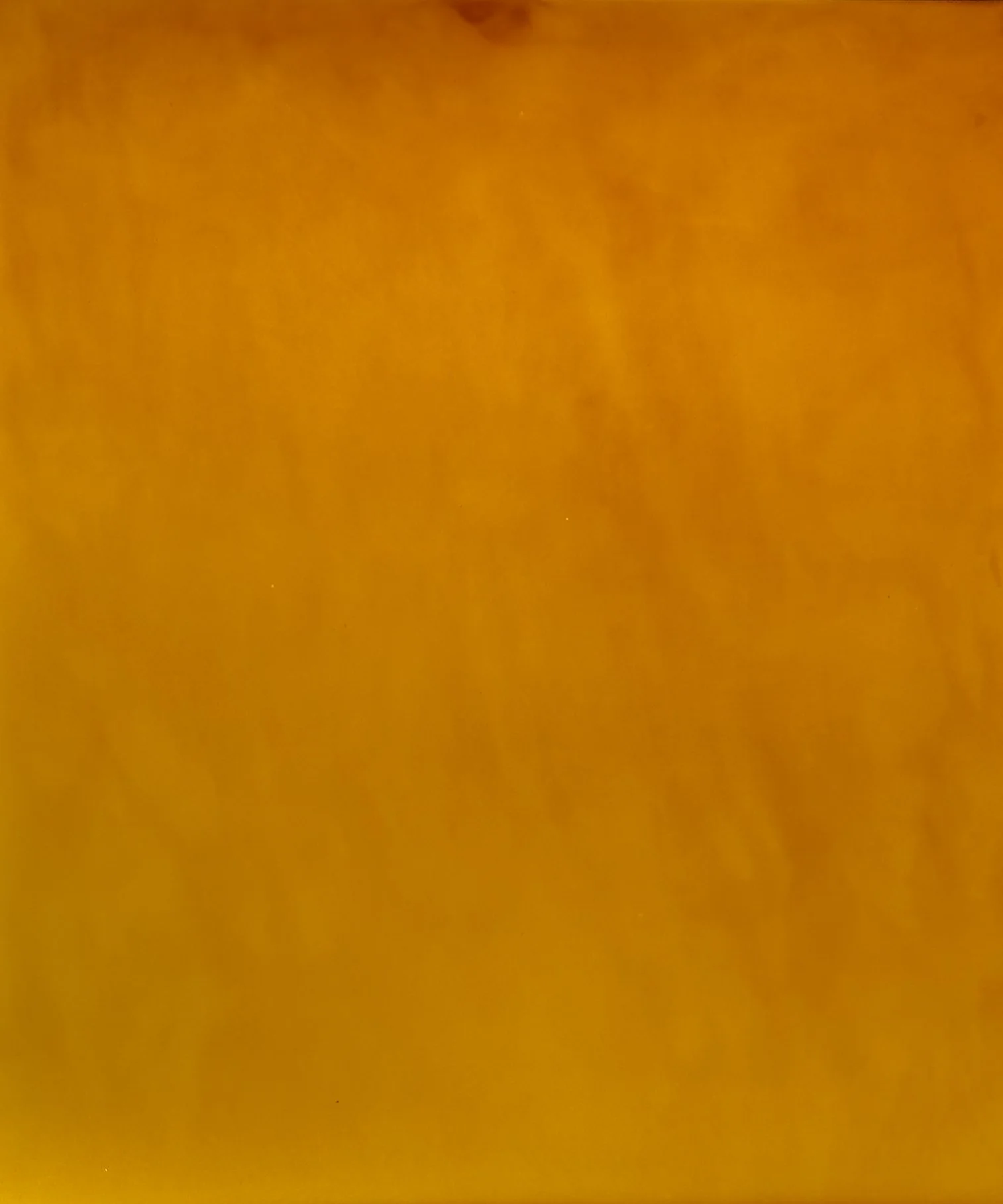
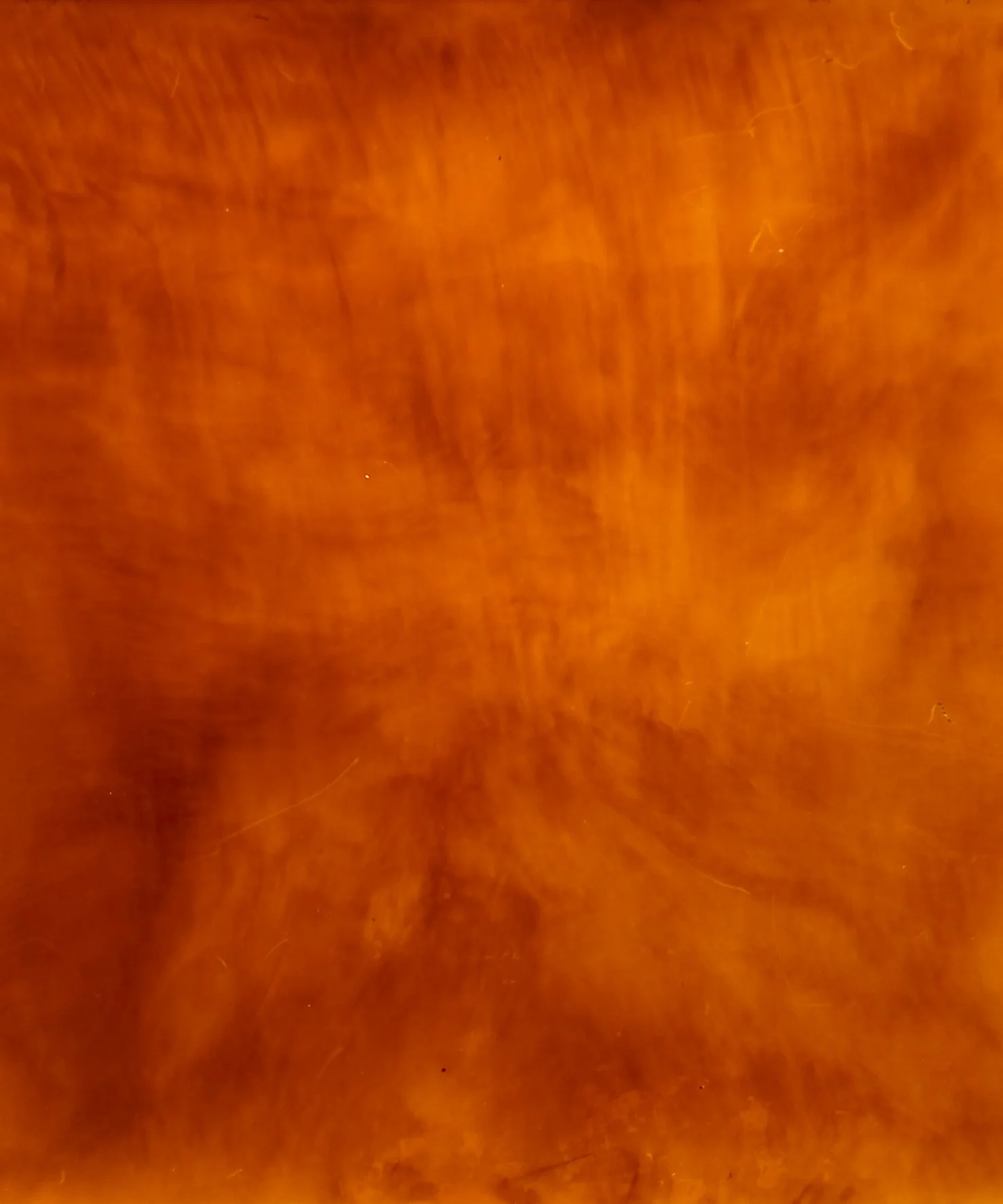
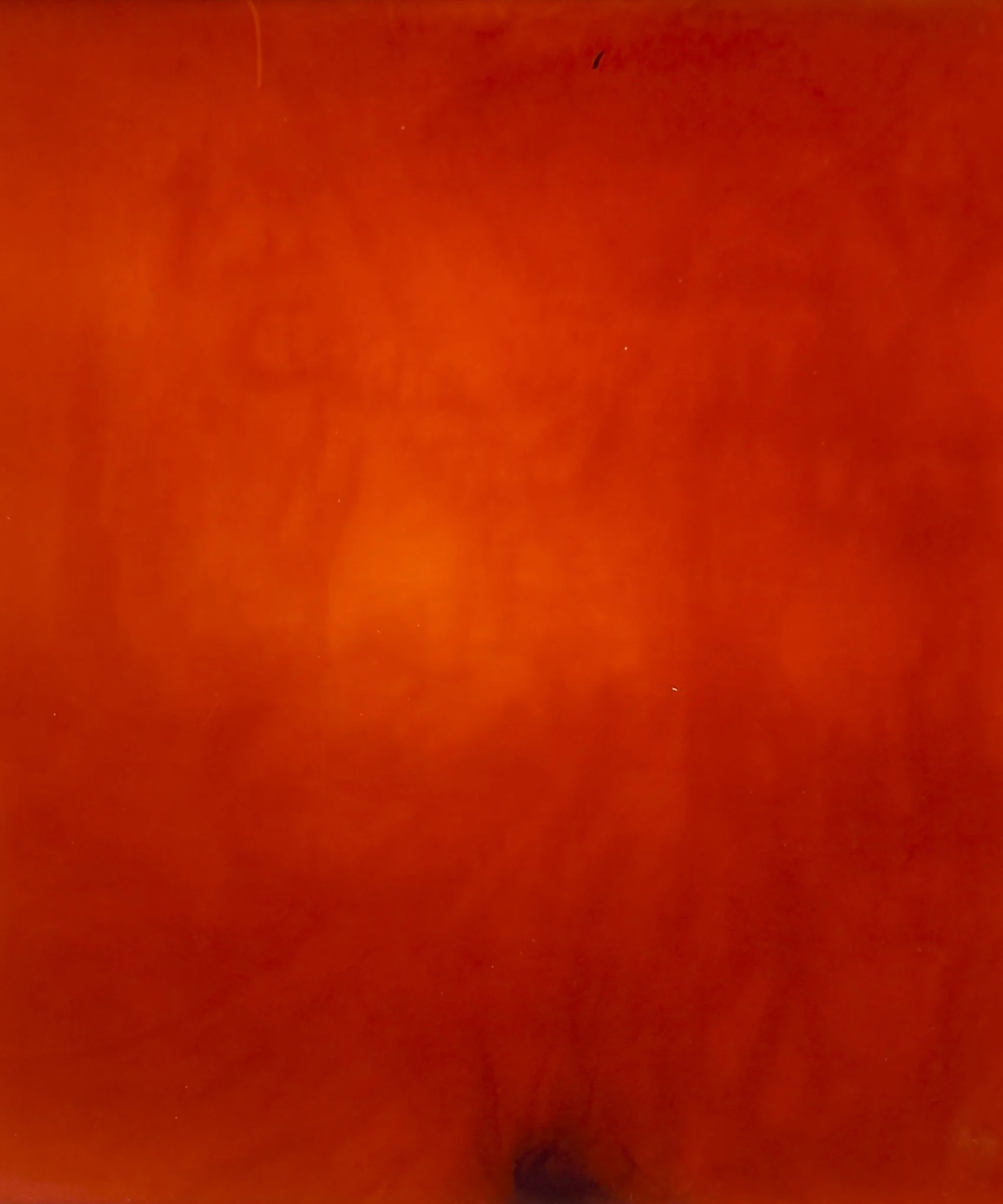
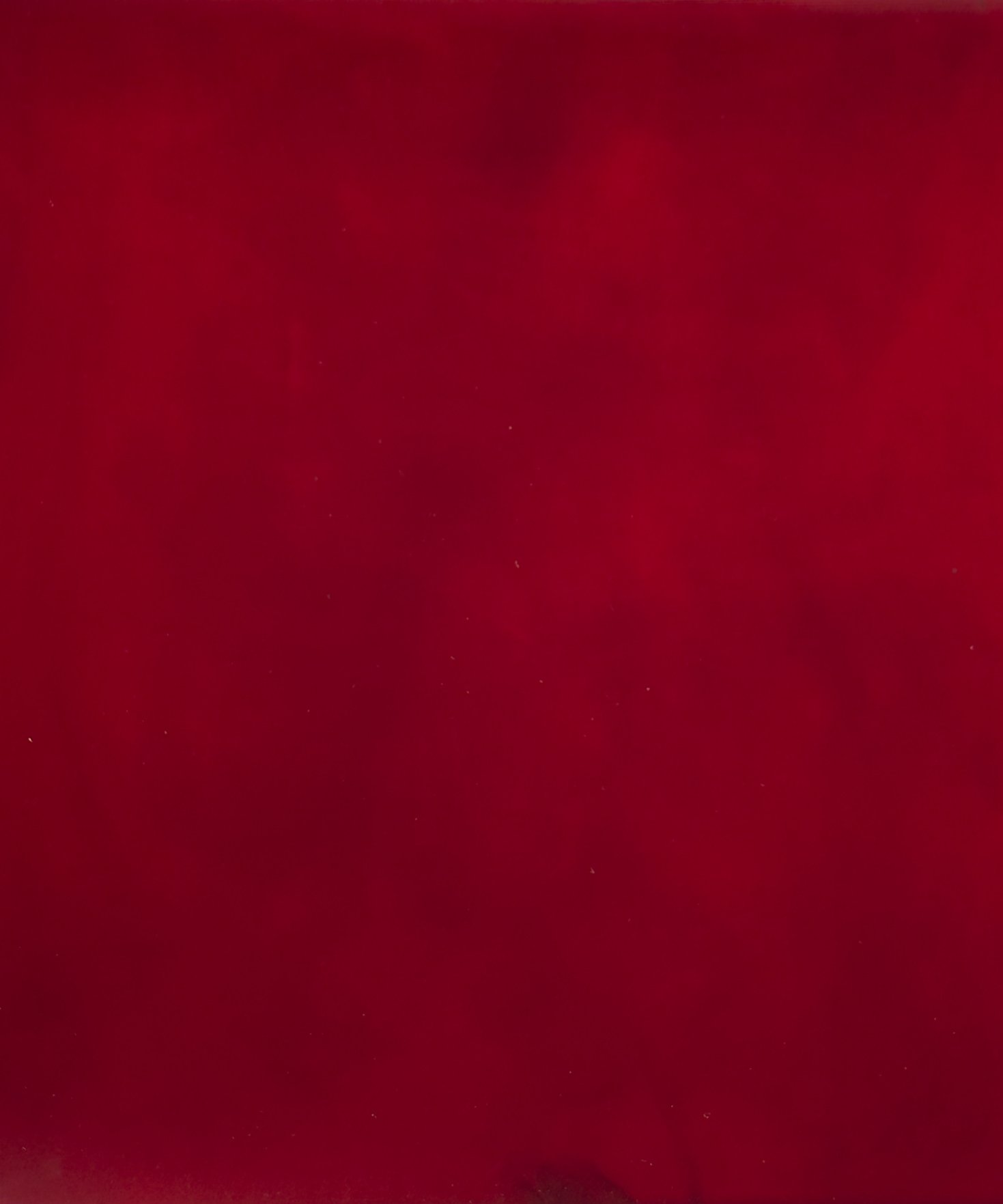
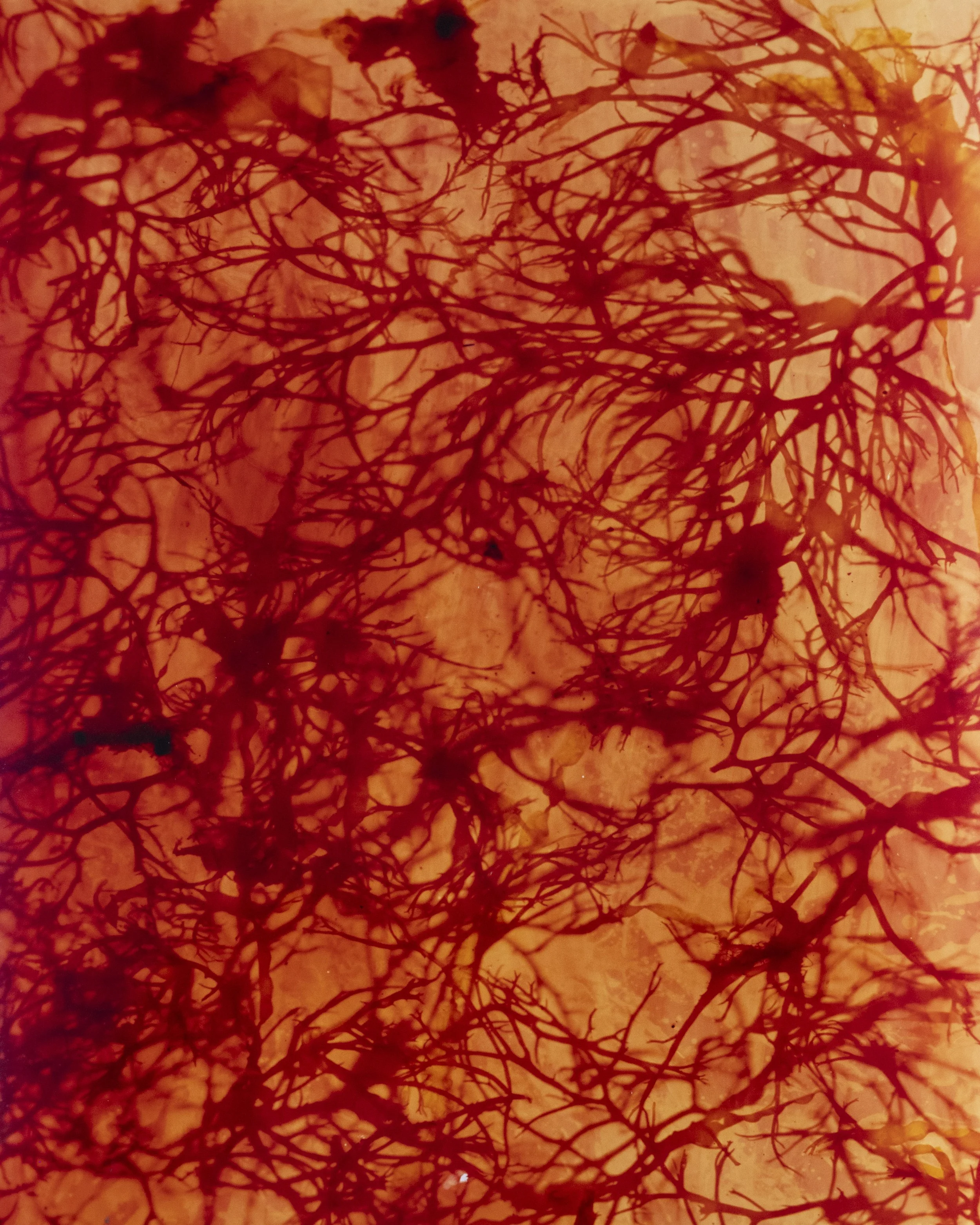
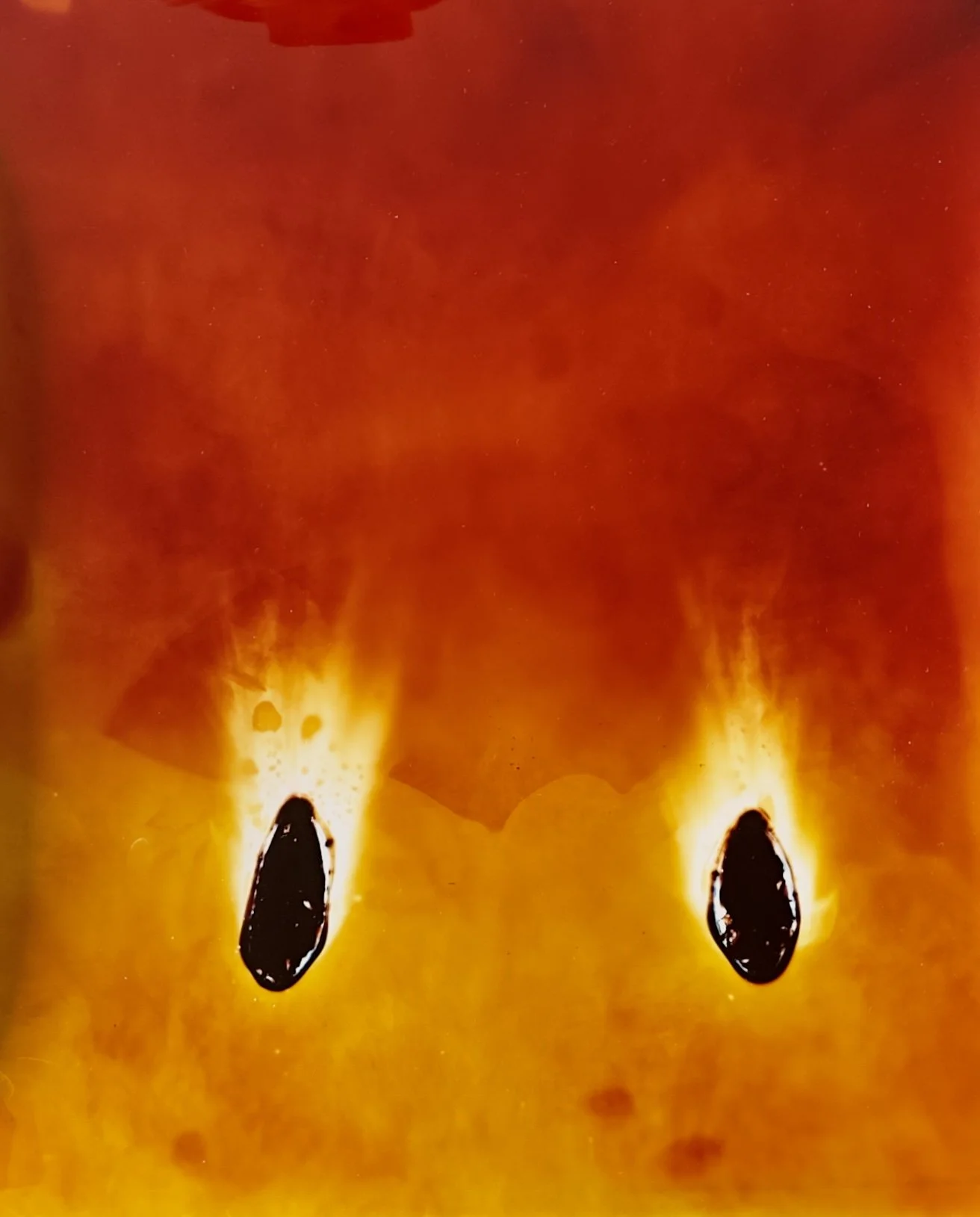
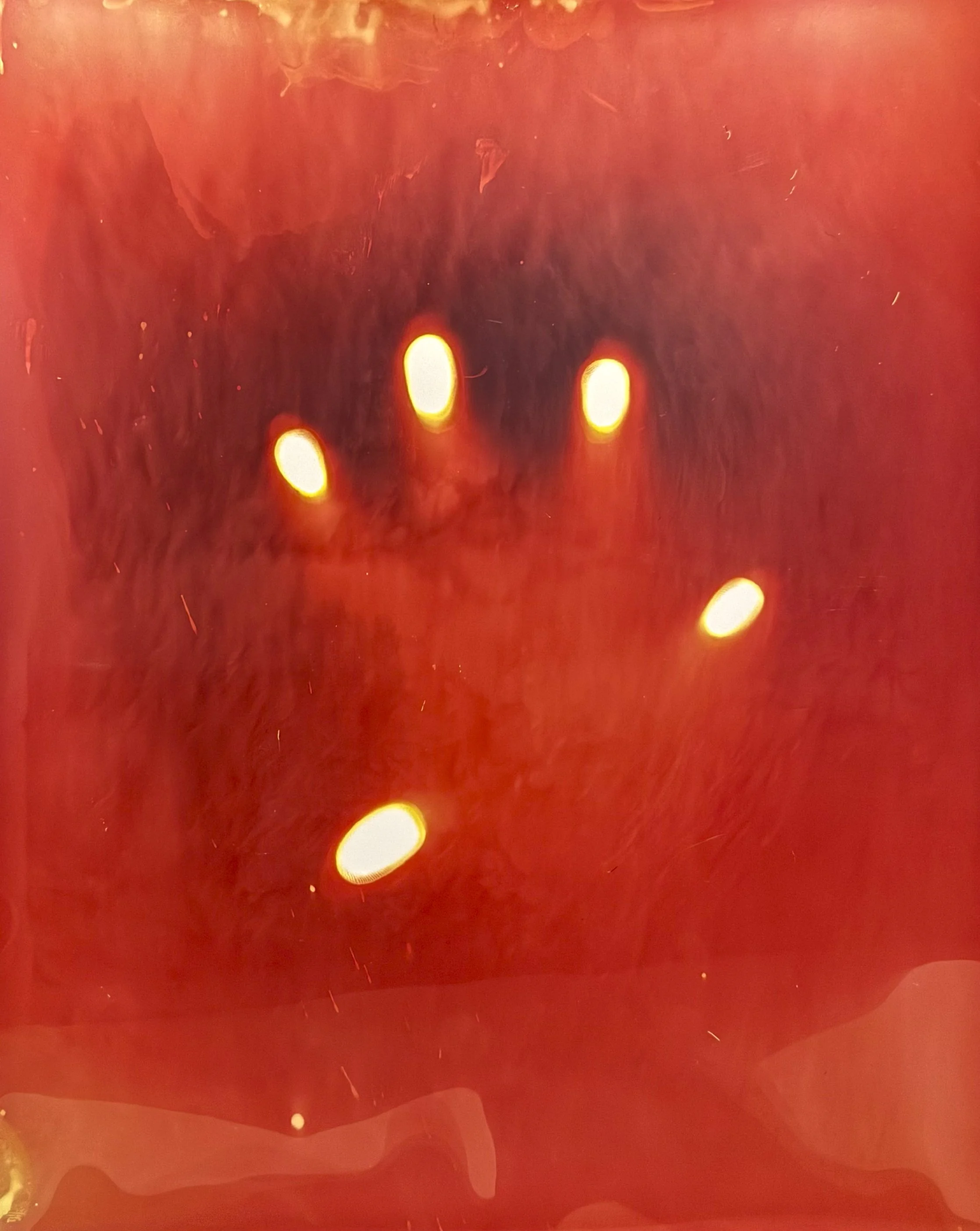
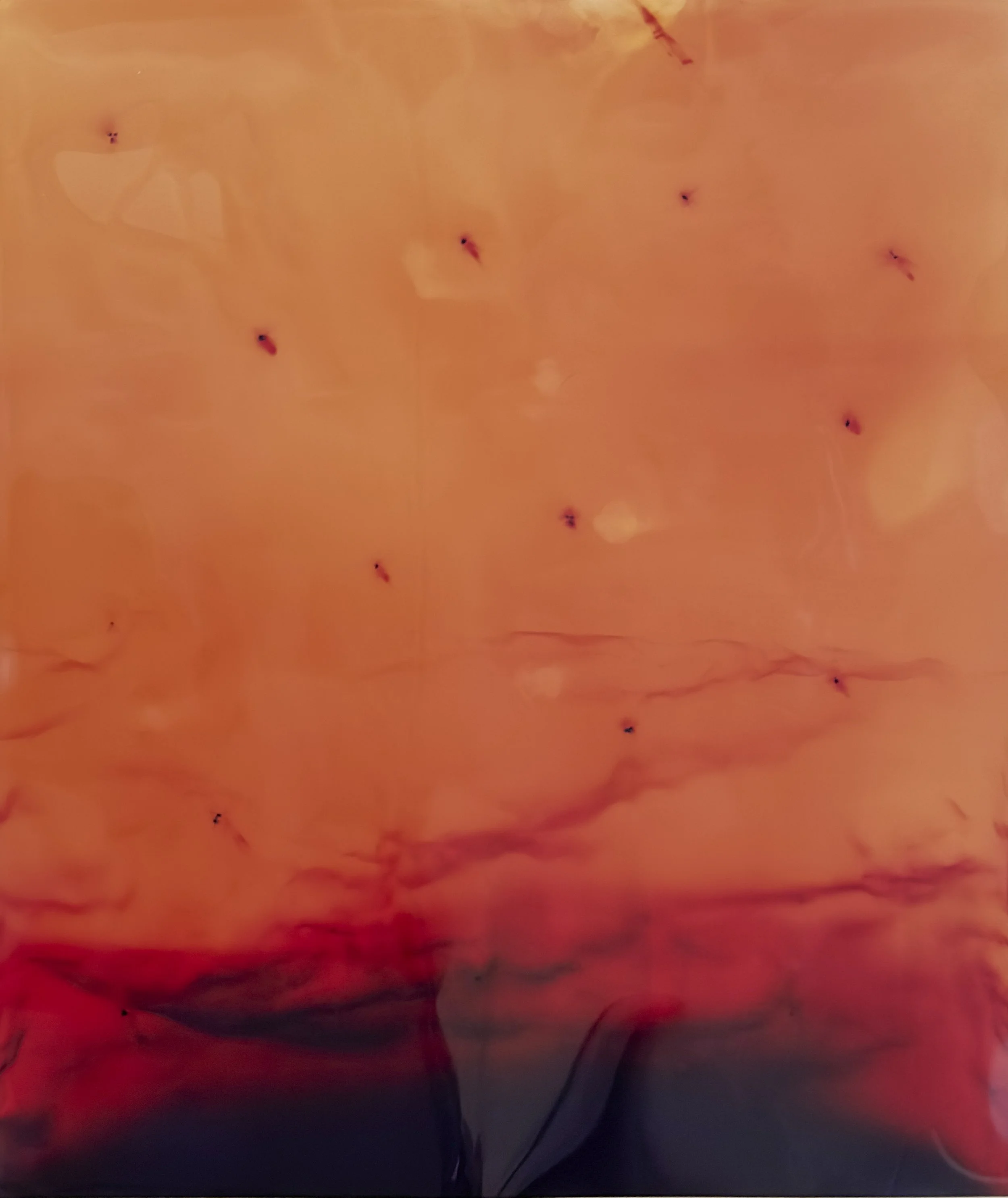
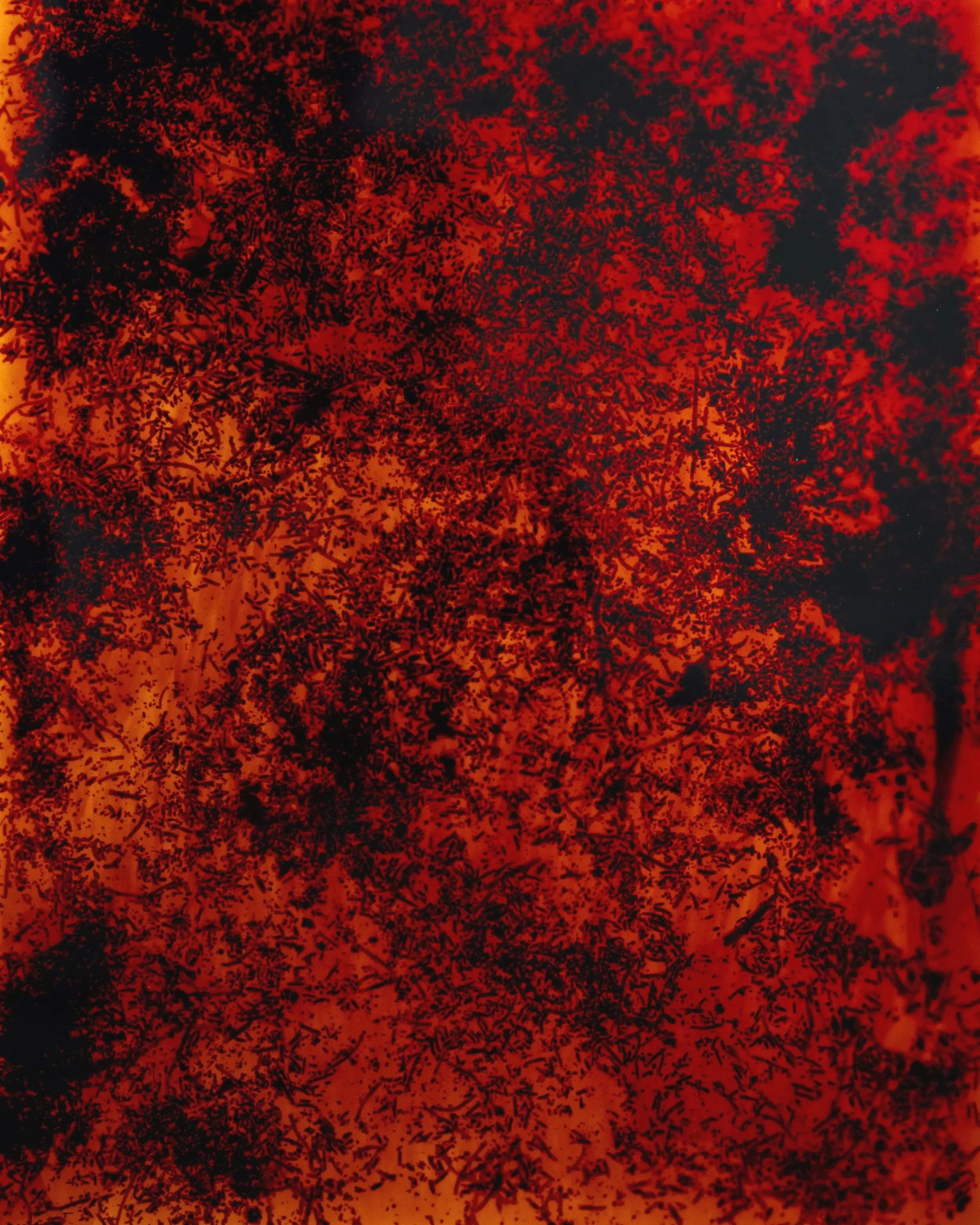
“Belli removes the camera, removes the traditional frame, even removes — as has happened before in her past work — the idea that the artist must dominate what she produces, and in its place lets in water, light, chemistry, chance, duration. It is a thoroughly contemporary form of authorship: not commanding the world, but arranging the conditions for it to leave its imprint. In a present obsessed with perfection and the continuous production of images, this work reminds us that seeing can also mean losing definition — recognizing that something reveals itself precisely in the moment it slips away.
Daniele Fenaroli for Arbiter Magazine
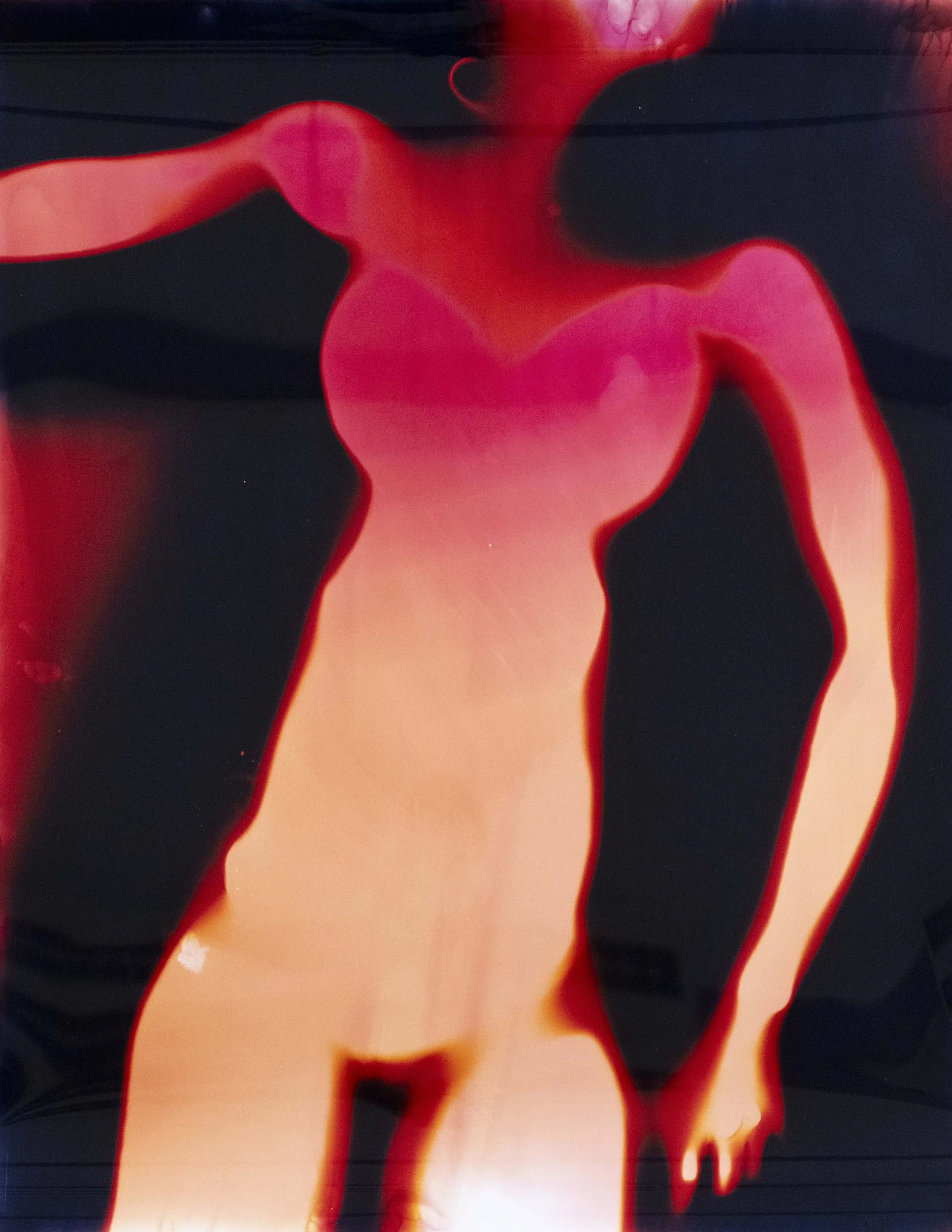
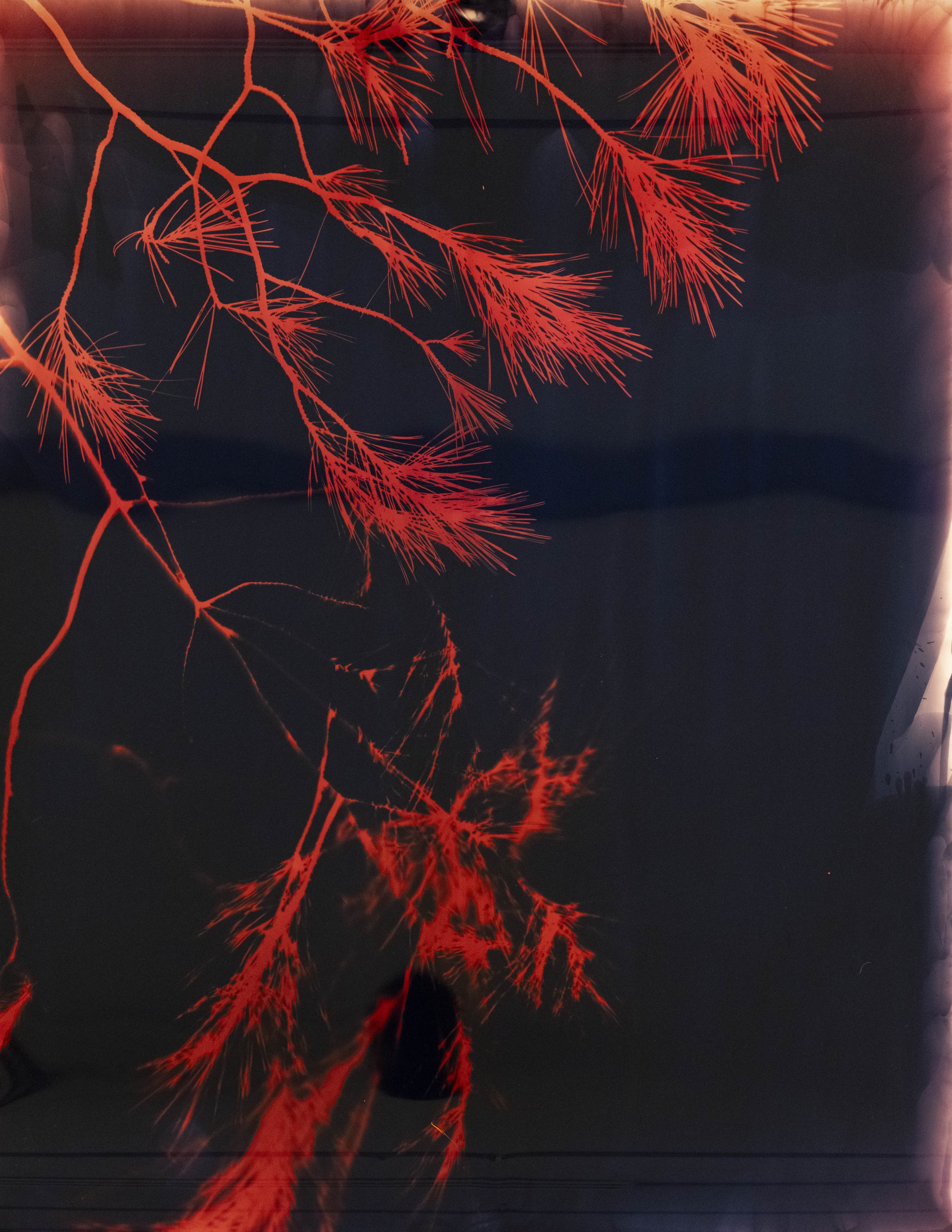
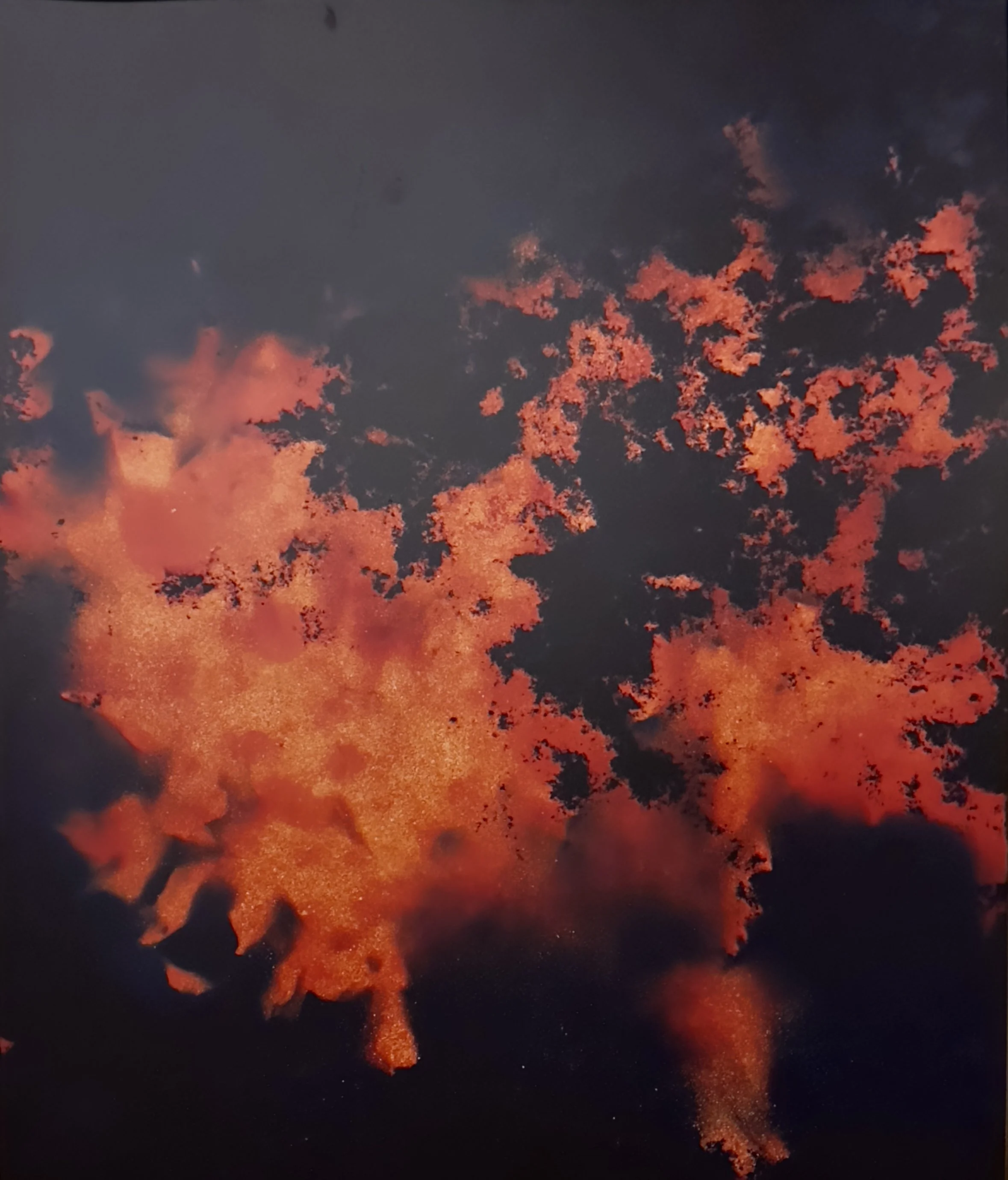
I’m a facilitator. Of course, I physically plunge the paper into the ocean in the night, or I bathe it in my bodily fluids.
But I can't really control the colors. I can't control the outcome. The ocean will always be sort of blue. My blood will always be sort of red. It's more like working with what's there already, and just accepting the risk of not liking what is coming up, and the lack of absolute control.
It's sort of like a dance. There has to be a rhythm, chemistry, time. You can only do it at night, given the photo-sensitivity of the paper, which makes it sound very shamanic. There are infinite applications. It's like the skin, it's material.
Federica Belli in conversation with Beyond Luxury

FAQ
What is the process behind these works?
1
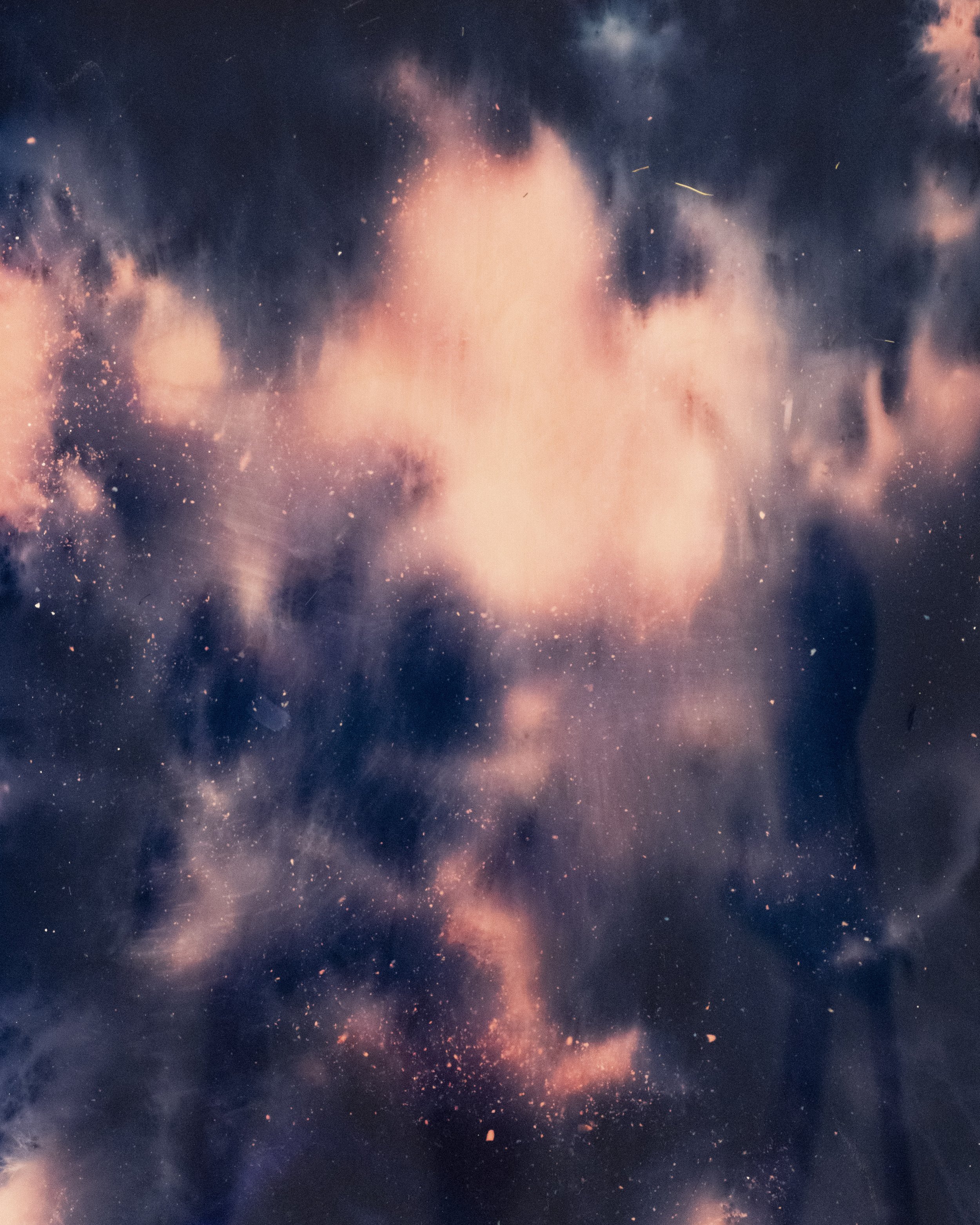
these pieces are created by immersing photosensitive paper in the different natural materials and fluids listed according to the piece, under the rays of the moonlight in nights of full or almost full moon. each sheet of paper is developed immediately after exposure to avoid contaminations and chemical interactions. it is the most direct and archaic form of photography, expanded and updated with a Japanese plastic based paper and explorations of contemporary questions in physics and mathematics.
Where is your studio? Can I visit?
2
I am based in Paris, france. i work in the darkroom with diamantino quintas, in bagnolet.
it is possible to coordinate a studio visit via email at fedebellirica@gmail.com.
I’m interested in a piece. How can I have more information?
3
depending on where you are based, you can reach out to one of the galleries listed below at the end of this page.
if you are located elsewhere, you can send me an email at fedebellirica@gmail.com and I will be happy to help.
Do you make custom pieces?
the work on this website stems from a personal research in the fields of quantum physics and consciousness, but I am happy to explore potential new quests & projects. hit me up at fedebellirica@gmail.com.